
Blog · Hardwood Buying Guide
Solid vs Engineered Hardwood: Which Is Better for PA Homes (Including Basements)
Deciding between solid and engineered hardwood is one of those flooring choices where the marketing photos all look identical — but the underlying wood is built for completely different scenarios. Pennsylvania humidity swings, basement concrete subfloors, and radiant-heat retrofits all push the decision toward one type or the other.
By the end of this guide you’ll know which type is right for your PA home, including the one room where solid hardwood is a $15,000 mistake waiting to happen. We cover construction differences, PA humidity behavior, where each type wins, refinishing reality, and how to think about the cost trade-off without falling for sales tactics. For your specific home, our engineered wood services team can walk you through what fits where.
What’s the actual difference between solid and engineered hardwood?
Solid hardwood is one continuous piece of real wood (3/4-inch thick, typically) cut from the tree. Engineered hardwood is a thinner layer of real wood (3–6 mm) bonded on top of a cross-laminated plywood or high-density fiberboard core. Both look identical on top — the species, stain, and finish are the same. The difference is what’s underneath, and that core decides how the floor behaves with humidity, concrete subfloors, and radiant heat.
How each type handles Pennsylvania humidity
Pennsylvania’s annual indoor humidity swings from 25–35% in winter (heat running, dry air) to 55–65% in summer (no A/C, humid days). That 30-point swing is what determines whether your floor stays flat or starts cupping.
Solid hardwood: works hard in stable rooms, fails in basements
Solid hardwood expands and contracts along the grain with humidity. In a kitchen or living room on the main floor, that movement is controlled enough to handle — you get tiny seasonal gaps in winter that close in summer. But take that same floor to a basement with concrete moisture and seasonal swings, and the boards cup (edges curl up), gap dramatically, or split. We see this in PA homes every spring.
Engineered hardwood: cross-grain core resists movement
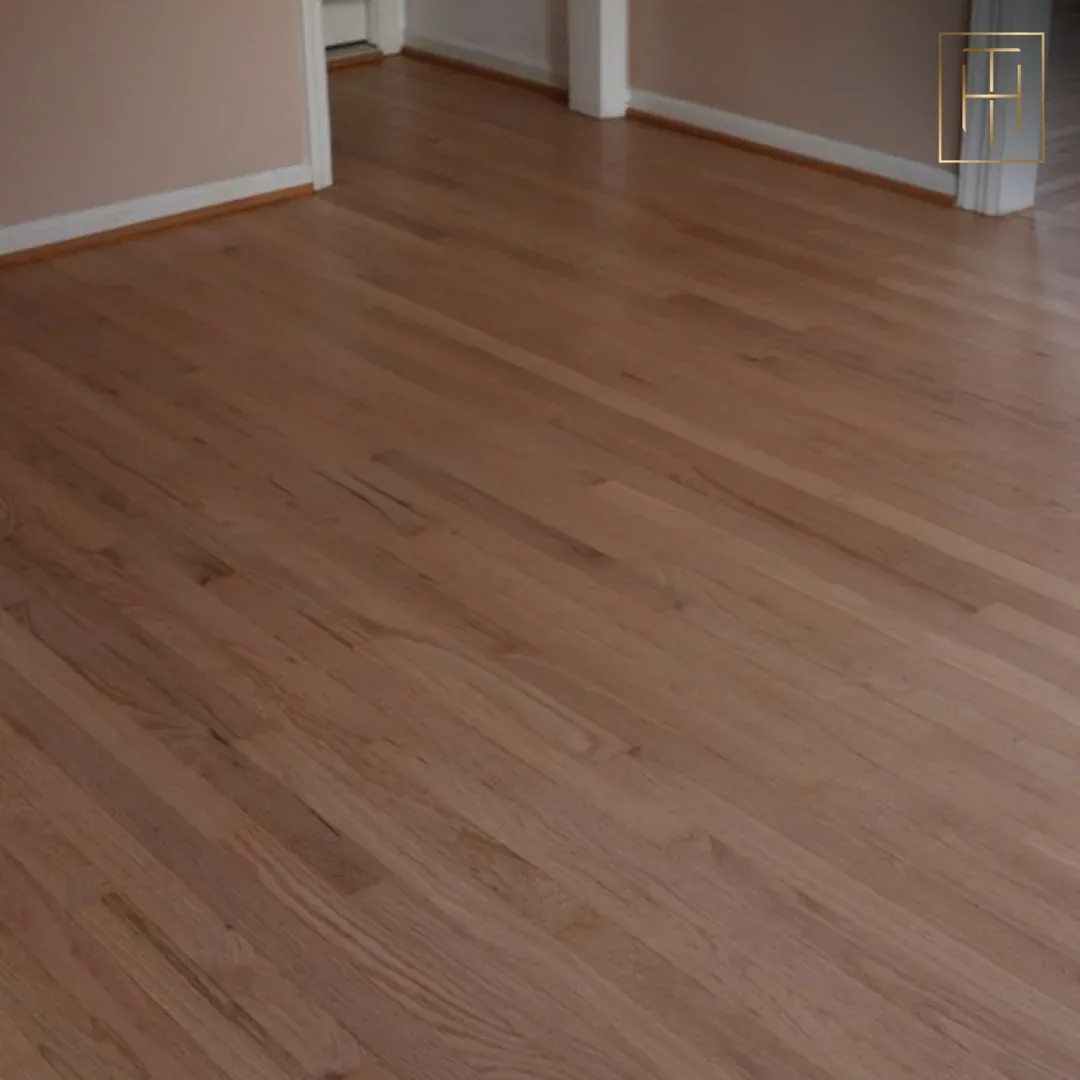
The plywood core in engineered hardwood is built with alternating grain directions — one layer running north-south, the next east-west, and so on. This cross-lamination cancels out the expansion forces that destroy solid wood in unstable conditions. Look: it’s the same principle that lets plywood subfloor sit flat for decades while a single board would warp.
Where solid hardwood wins
Three scenarios make solid hardwood the clear choice, and they cover the majority of above-grade PA homes.
Above-grade rooms in homes you’ll own 20+ years
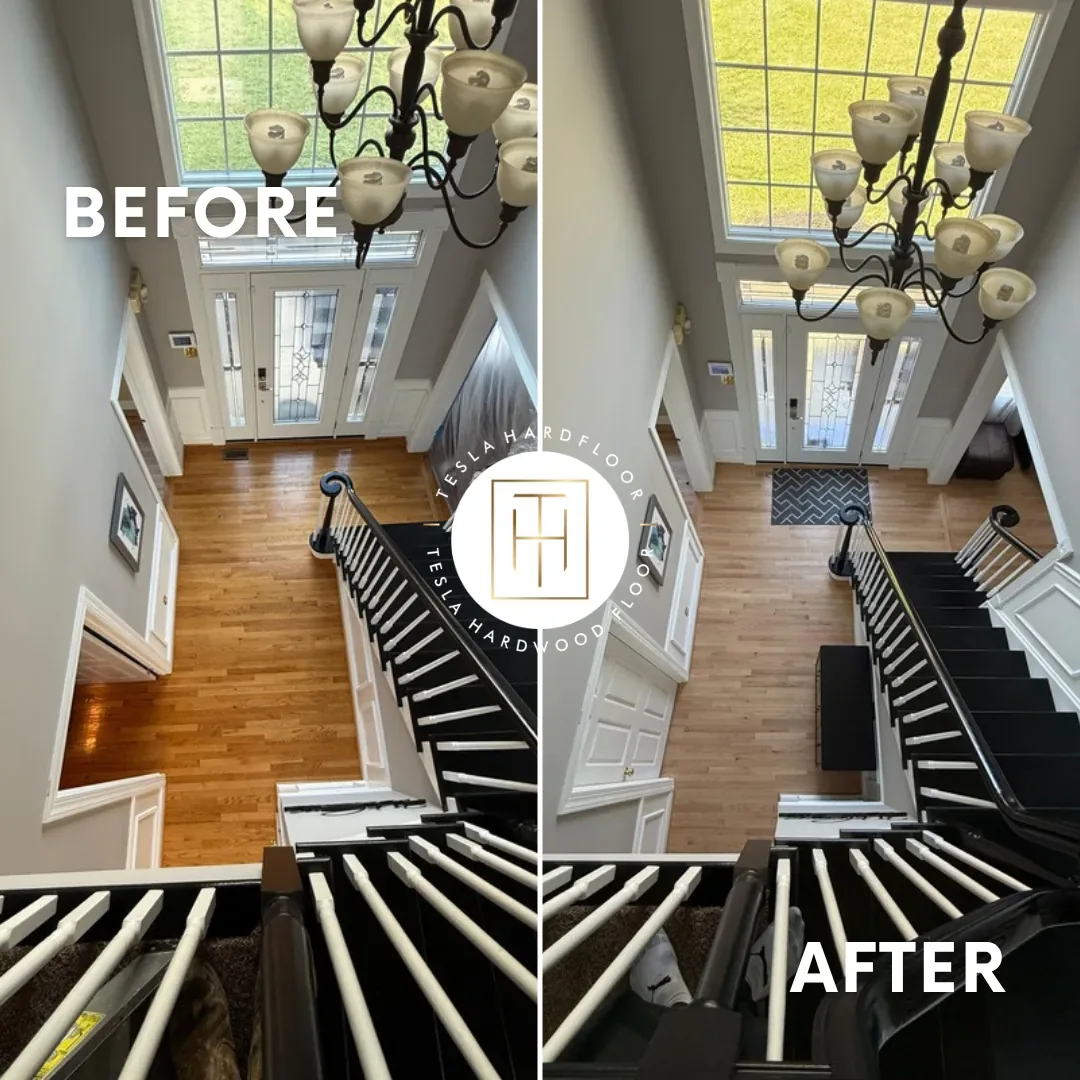
Main floors, second floors, formal dining rooms — anywhere the subfloor is plywood over joists and the room has climate control. Solid hardwood here will outlive engineered by decades, and the refinish-many-times advantage compounds: a solid floor can be sanded back to bare wood 5–7 times across its life. Each refinish adds 10–15 years of fresh-looking floor.
Homes with character or historic value
In Solebury, Buckingham, and Doylestown, plenty of homes from the 1700s–1900s have original solid hardwood that’s been refinished four or five times. If you’re restoring a historic property in PA, solid is the only choice that preserves the original character — engineered cannot be used in historic restoration where authentic period materials matter.
Resale-focused renovations
Bottom line? Solid hardwood still commands the highest resale premium in the Greater Philadelphia / Bucks County market. Buyers and appraisers know the difference, and listings with “solid hardwood throughout” consistently outperform “engineered hardwood” listings on price-per-square-foot. See our breakdown in LVP or Hardwood: Which Adds More Value to Your Home.
Where engineered hardwood wins
Four situations where engineered isn’t just “the alternative” — it’s the only correct choice.
Basements (the “solid hardwood is a $15,000 mistake” room)
Concrete subfloors carry moisture even when they look dry. Combine that with PA basement humidity, and solid hardwood will cup or crown within 2–3 years. Engineered hardwood floated over a proper vapor barrier handles this without complaint. If you’re finishing a basement in West Chester, Lower Merion, or Blue Bell, our engineered wood in Blue Bell, PA page covers exactly how the install works.
Concrete slab homes (no basement, slab-on-grade)
Same reasoning as basements — solid wood cannot be installed directly over concrete without first building a plywood subfloor, which raises floor height by 3/4” and costs more than the engineered alternative.
Radiant floor heating
The temperature cycling under radiant heat causes solid wood to expand and contract unpredictably. Boards gap in winter and swell in summer. Engineered hardwood’s cross-laminated core handles cycling uniformly — this is why every radiant-heat installer specifies engineered.
Condos and townhomes with HOA rules
Many condo and townhome HOAs in the Greater Philadelphia area require glue-down installations (not nail-down) to reduce noise transmission to neighbors below. Engineered hardwood is built for glue-down. Solid wood is not — it’s designed to be nailed into a wood subfloor.
Refinishing reality: how many times can you sand each?
This is the question that separates the homeowners who pick on lifetime value from the ones who pick on day-one price. Here’s the honest breakdown.
| Refinish Factor | Solid Hardwood | Engineered Hardwood |
|---|---|---|
| Total wood thickness | 3/4” (19mm) | 3/8”–5/8” total; wear layer 2–6mm |
| Times you can refinish | 5–7 | 1–3 (depending on wear-layer thickness) |
| Wear-layer headroom after install | Years of refinishing left | Limited to wear layer above the seam |
| Realistic lifespan | 50–100 years | 20–40 years |
| Premium engineered exception | — | Top-tier products with 6mm wear layer can refinish 2–3 times like a thinner solid |
What does this mean? If you plan to refinish more than twice over the life of the floor — engineered won’t take you there. If you’ll refinish at most once or twice (which is what most homeowners actually do), engineered with a quality 4–6mm wear layer performs identically to solid for two-thirds the cost.
Want a deeper view on timing? See our guide on how long hardwood refinishing actually takes — engineered and solid follow slightly different schedules.
The cost trade-off (without the sales tactics)
Let’s break it down. Solid and engineered hardwood pricing isn’t about “cheap vs expensive” — it’s about where the cost shows up and what you give up at each tier.
Entry-tier engineered ($)
Thin wear layer (1–2mm), basic core, refinish 0–1 times max. Fine for rental properties or short-ownership homes — but the cost-per-decade is actually worse than solid hardwood once you factor in replacement instead of refinishing.
Mid-tier engineered ($$)
3–4mm wear layer, quality core construction, refinish 1–2 times. The sweet spot for most PA homeowners who want engineered. Performs identically to solid in real-world use, costs roughly two-thirds, and handles humidity better.
Premium engineered + solid hardwood ($$$)
Premium engineered with 5–6mm wear layer narrows the gap with solid significantly — and pulls ahead in basements, radiant heat, and concrete-slab homes. Solid hardwood holds the absolute long-term value crown, but only when installed in the right room. In the wrong room (any below-grade space), it underperforms even entry-tier engineered.
Frequently asked questions
Common questions from PA and NJ homeowners deciding between solid and engineered hardwood.
Can you put solid hardwood in a Pennsylvania basement?
We never recommend it. Pennsylvania basements have moisture coming from concrete subfloors, humidity swings between summer (60–65%) and winter heat (25–35%), and occasional minor seepage. Solid hardwood cups, warps, and splits under those conditions. Engineered hardwood with a plywood or HDF core is the only correct choice for below-grade rooms in PA.
Which lasts longer — solid or engineered hardwood?
Solid hardwood lasts longer in absolute terms — 50 to 100 years with proper care, because it can be sanded and refinished 5 to 7 times. Engineered hardwood typically lasts 20 to 40 years and can be refinished 1 to 3 times depending on wear-layer thickness. For a forever home above grade, solid wins on lifespan. For 10–20 year ownership in a condo or basement, engineered wins on practicality.
Does engineered hardwood look as good as solid?
On day one, yes — both use the same real wood species on the top wear layer (oak, maple, hickory, walnut, etc.). After 15 years, solid still has refinishing headroom; engineered may show wear that can’t be sanded out. Pick based on the room and the timeframe, not just the showroom photo.
Can you install engineered hardwood directly over concrete?
Yes — that’s actually one of its main advantages. Engineered hardwood can be glued down or floated over concrete with the right moisture barrier and underlayment. Solid hardwood cannot be installed over concrete without first building a wood subfloor — which adds height, cost, and complexity.
Which is better for radiant floor heating?
Engineered hardwood. Its cross-laminated plywood core expands and contracts uniformly with temperature changes from radiant heat below. Solid hardwood expands unpredictably along the grain — gaps appear in winter when the heat is on, and the boards swell in summer. Engineered handles cycling without movement.
Is engineered hardwood considered ‘real’ wood?
Yes. The top wear layer is real solid wood — same species and finish you’d get with solid hardwood. The difference is the core: engineered uses cross-laminated plywood or HDF underneath, which gives the dimensional stability solid lacks. Many high-end products use a 4mm+ wear layer, which is thicker than the wear layer left on a solid floor that’s been refinished a few times.
Explore Our Services
- Hardwood Flooring
- Hardwood Floor Refinishing
- Engineered Wood
- Stairs
- Vinyl Flooring
- Laminate Flooring
- Tile Flooring
Need help picking solid vs engineered for your home?
If you’re in West Chester, PA or surrounding PA / NJ areas, request a quote and we’ll come look at your specific subfloor, humidity conditions, and renovation plan before recommending solid or engineered. No phone-pitch, no upselling — just the right choice for the right room.
Prefer a direct link? https://teslahardwoodfloor.com/#form