
Hardwood Flooring Guide
White Oak vs Red Oak Flooring: How to Choose the Right One for Your Home
Choosing between white oak and red oak is the number-one decision most homeowners face before buying hardwood floors. Both are beautiful. Both are durable. But they look very different on the floor — and they behave differently when you stain them.
This guide breaks down exactly what sets them apart: hardness numbers, grain patterns, tone, stain performance, cost, and which one fits today’s PA home design trends. By the end, you’ll know which species is right for your project — and why.
White Oak vs Red Oak Flooring: The Core Differences at a Glance
Before diving into each factor, here’s a side-by-side comparison so you can see where the two species diverge most clearly.
| Factor | White Oak | Red Oak |
|---|---|---|
| Janka Hardness | 1,360 | 1,290 |
| Grain Pattern | Tight, subtle, uniform | Open, dramatic, prominent |
| Base Tone | Cool tan / light beige | Warm pink / amber |
| Best Stain Colors | Grays, whites, naturals, dark charcoal | Amber, honey, cherry, medium brown |
| Gray Stain Performance | Excellent | Poor (turns muddy or purple) |
| Relative Cost | ~10–15% premium over red oak* | Baseline |
| PA Design Trend (2020+) | Dominant choice | Still popular in traditional homes |
*Pricing varies based on project scope, materials selected, and site conditions. Contact us for a personalized estimate.
Janka Hardness: What the Numbers Actually Mean for Your Floor
The Janka hardness test measures how much force it takes to embed a steel ball halfway into a wood plank. It’s the industry standard for comparing how well a species resists dents, scratches, and everyday wear.
According to the National Wood Flooring Association (NWFA) species guide, white oak scores 1,360 and red oak scores 1,290. That’s about a 5% difference — meaningful, but not dramatic.
What 1,360 vs 1,290 means in real life
In everyday use — kids, dogs, furniture legs, dropped items — both species hold up very well. Neither will dent under normal foot traffic. The gap becomes relevant in high-traffic commercial settings or homes with very large dogs and heavy furniture being moved frequently.
- White oak at 1,360: Slightly more resistant to surface scratches from pet nails and grit tracked in from outside.
- Red oak at 1,290: Still well above the threshold for residential use. Softer than white oak but harder than many popular species like pine or walnut.
- Both species: Can be refinished multiple times over decades, which matters far more than a 70-point Janka difference in most homes.
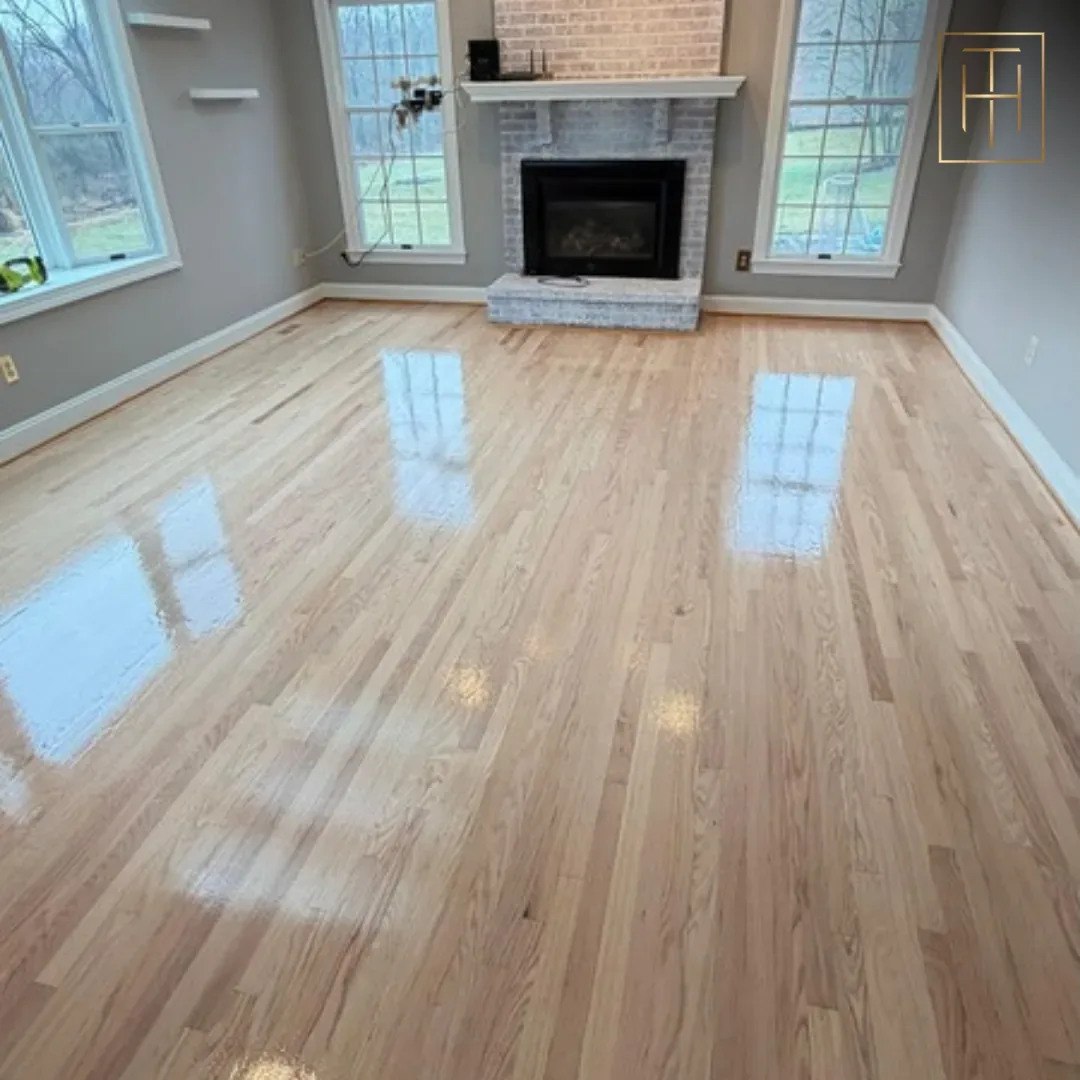
Grain Pattern: Tight vs Open — Why It Changes Everything
Grain pattern is one of the biggest visual differences between the two species. It affects how a floor looks from across the room, how it reads under different lighting, and — critically — how stain absorbs into the wood.
White oak grain: tight and uniform
White oak has a finer, tighter grain with less visible pore structure. The medullary rays (the fleck-like lines running across the grain) are more pronounced in white oak, especially in quarter-sawn cuts. This gives it a clean, almost modern look that reads as calm and sophisticated in large open spaces.
The tight grain also means stain absorbs more evenly — which is why white oak handles gray, white-wash, and natural finishes so cleanly. There are fewer open pores to create blotchy spots or uneven color.
Red oak grain: open and dramatic
Red oak has a wider, more open grain with larger pores and a more pronounced pattern. From across the room, the grain reads as bold and characterful — it’s what most people picture when they think of “classic hardwood floors.”
The open grain makes red oak excellent at absorbing warm stains like amber, honey, and cherry — the color soaks into the pores and creates rich, deep tones. But that same open grain is why gray stains almost never work on red oak: the pinkish undertone and open pore structure turn gray stains muddy, purple, or uneven.
Tone Differences: Cool Tan vs Warm Pink — Which Fits Your Home?
This is often the deciding factor for homeowners who are matching floors to existing paint colors, cabinetry, or furniture. The base tone of each species pulls in a completely different direction.
White oak: cool, neutral, versatile
Raw white oak reads as a light tan or beige — closer to the cool side of the spectrum. It has no pink in it. This neutrality is exactly why it pairs so well with modern design palettes: white walls, gray tones, black accents, natural linen, and Scandinavian-inspired interiors all work beautifully with white oak.
It’s also why white oak became the go-to species for hardwood floor installation in new construction and renovation projects across Chester County and the Main Line starting around 2018. Designers and homeowners alike found it easier to build a whole-home palette around a neutral base.
Red oak: warm, rich, traditional
Raw red oak has a distinct pinkish or reddish undertone. Under warm lighting, it glows with amber richness. This warmth is a feature — not a flaw — in traditional, colonial, and craftsman-style homes where warm wood tones are part of the design language.
If your home has warm-toned cabinetry, brick, or traditional millwork, red oak’s natural color works with those elements rather than against them. The challenge comes when homeowners try to push red oak into a modern cool palette — the pink undertone fights back.

How Each Species Takes Stain — The Most Important Practical Difference
Stain performance is where the choice between white oak and red oak becomes most consequential. Getting this wrong means the floor you imagined and the floor you get look nothing alike.
White oak: the clear winner for grays, naturals, and dark tones
White oak’s tight grain, neutral base tone, and lower tannin reactivity make it the best canvas for a wide range of stain colors. According to Bona’s staining guide by species, white oak accepts gray and white-wash stains cleanly without the blotching or color-shifting that plagues other species.
- Gray stains: Read true and even on white oak — no purple or muddy cast.
- Natural / no stain: White oak’s raw color is beautiful on its own — many homeowners choose a clear coat and let the wood speak.
- Dark charcoal / ebony: Absorbs evenly, creating a dramatic but clean look.
- White-wash / wire-brush: White oak’s medullary rays become a feature with these finishes.
Red oak: built for warm, traditional stain colors
Red oak’s open grain and warm undertone make it excellent at absorbing and amplifying warm stain colors. Amber, honey, golden pecan, and cherry stains look richer on red oak than on almost any other domestic species.
- Amber / honey / golden: The pinkish base tone and open grain work together to create deep, glowing warmth.
- Cherry / medium brown: Absorbs beautifully and evenly.
- Gray stains: Almost never work — the pink undertone turns gray stains purple, green, or muddy. Avoid this combination.
- Natural / no stain: Shows the pink undertone clearly — beautiful in traditional homes, but can feel dated in modern interiors.
Cost Reality: White Oak Commands a Premium — Here’s Why
White oak typically costs around 10–15% more than red oak for comparable grades and widths.* That premium reflects real market dynamics: demand for white oak has surged since 2018, while supply has grown more slowly. Wide-plank white oak (5″ and above) commands an even larger premium over comparable red oak widths.
What drives the price gap
- Demand: White oak is now the dominant species in new construction and renovation across the Philadelphia suburbs and Chester County — demand has outpaced supply in recent years.
- Yield: White oak trees tend to produce fewer clear, wide boards per log than red oak, which affects material cost at the mill level.
- Wide-plank availability: Wide-plank white oak (5″+) is more limited in supply, pushing prices higher for that format.
Is the premium worth it?
For most homeowners choosing a gray, natural, or modern stain color — yes. The stain performance difference alone justifies the cost gap. A gray stain that looks beautiful on white oak simply cannot be replicated on red oak, regardless of budget or technique.
If you’re going with a warm amber or honey stain in a traditional home, red oak delivers equal or better results at a lower price point. In that scenario, paying the white oak premium makes less sense.
*Pricing varies based on project scope, materials selected, and site conditions. Contact us for a personalized estimate.
Modern PA Home Trend: Why White Oak Has Dominated Since 2020
Walk through any new construction home in West Chester, Wayne, Villanova, or Bryn Mawr built after 2020 and you’ll almost certainly find white oak floors. This isn’t a coincidence — it reflects a broader shift in how PA homeowners and designers think about interior design.
The shift away from warm, busy floors
The design trend that took hold across the Philadelphia suburbs in the late 2010s moved away from dark, glossy, busy floors toward lighter, calmer, more neutral surfaces. White oak — with its tight grain, cool tone, and versatility with gray and natural stains — fit that aesthetic perfectly.
For more on where PA hardwood design is heading, see our guide to 2026 hardwood color trends for the region.
White oak and open-concept living
Open-concept floor plans — where the floor runs continuously from the kitchen through the dining room and into the living room — benefit from white oak’s neutral tone. A floor that reads as calm and consistent over a large area makes the whole space feel larger and more cohesive. Red oak’s bolder grain and warmer tone can feel busier in large open spaces, especially under modern lighting.
Red oak still has a strong place
Red oak isn’t going anywhere. Older homes in West Chester, Wayne, and the surrounding area were built with red oak floors — and those floors are beautiful, durable, and worth preserving. If your home already has red oak and you’re refinishing rather than replacing, red oak is still an excellent choice. See our work on hardwood flooring in Villanova for examples of both species done well.

What If You’re Matching Existing Red Oak Floors?
This is one of the most common situations we encounter: a homeowner wants to add hardwood to a room that currently has carpet or tile, but the adjacent rooms already have red oak floors. The goal is a seamless match.
The honest answer about matching
Matching existing red oak floors is possible — but it requires care. The key variables are the age of the existing floor (older red oak darkens and mellows significantly), the current stain color, and whether the existing floors will be refinished at the same time as the new installation.
- If refinishing everything at once: Install new red oak, then sand and stain all floors together. This is the most reliable way to achieve a true match.
- If keeping the existing finish: New red oak boards will look lighter and pinker than aged red oak. A skilled installer can blend the stain to get close, but a perfect match is rarely possible without refinishing.
- Adding white oak to a red oak home: Generally not recommended for seamless flow. The grain and tone differences will be obvious at the transition point. White oak works beautifully as a deliberate contrast (different rooms, different levels) but not as a match for red oak.
Which Should You Choose? A Simple Decision Framework
After covering all the variables, here’s a straightforward way to make the call based on your specific situation.
Choose white oak if…
- You want a gray, white-wash, natural, or dark charcoal stain.
- Your home has a modern, transitional, or Scandinavian-inspired design palette.
- You have cool-toned paint colors (whites, grays, blues, greens).
- You’re doing a full new installation with no existing floors to match.
- You want the floor that aligns with current PA design trends and resale appeal.
- You have active pets and want the slight hardness advantage.
Choose red oak if…
- You’re matching existing red oak floors in adjacent rooms.
- Your home has a traditional, colonial, or craftsman design aesthetic.
- You want a warm amber, honey, or cherry stain color.
- You have warm-toned cabinetry, brick, or traditional millwork to complement.
- Budget is a priority and the stain color you want works equally well on red oak.
For a hands-on look at both species in real PA homes, explore our hardwood floor installation portfolio — we’ve installed both species across West Chester, Wayne, Villanova, Bryn Mawr, and the surrounding communities.
Frequently Asked Questions
Common questions about white oak vs red oak flooring from homeowners across West Chester and the Philadelphia suburbs.
What is the main difference between white oak and red oak flooring?
The main differences are grain pattern, tone, and stain performance. White oak has a tighter grain, a cooler tan tone, and a Janka hardness of 1,360 — it takes gray and natural stains beautifully. Red oak has a wider, more open grain, a warm pinkish undertone, and a Janka hardness of 1,290 — it excels with warm amber and honey stains. White oak is the dominant choice in modern PA homes; red oak remains popular in traditional and colonial-style interiors.
Is white oak or red oak harder and more durable?
White oak is slightly harder, with a Janka rating of 1,360 compared to red oak’s 1,290. In practical terms, both species are highly durable for residential use and can be refinished multiple times over their lifespan. The 70-point Janka difference gives white oak a slight edge in homes with large dogs or very high foot traffic, but for most households, both species will perform equally well over decades of use.
Can you stain red oak gray?
Gray stain on red oak almost never looks the way homeowners expect. Red oak’s pinkish undertone and open grain cause gray stains to shift toward purple, green, or a muddy tone rather than a clean, true gray. If you want a gray stain, white oak is the correct species — its neutral base tone and tight grain allow gray stains to read cleanly and evenly. No amount of technique or product selection will fully overcome red oak’s chemistry when it comes to gray staining.
Is white oak flooring more expensive than red oak?
Yes — white oak typically commands a premium of around 10–15% over comparable red oak grades and widths.* This reflects the surge in demand for white oak in PA home design since 2018, combined with slower growth in supply. Wide-plank white oak (5″ and above) carries an even larger premium. Whether the extra cost is worth it depends on your stain color and design goals — for gray or natural finishes, the performance difference justifies the price gap. For warm amber or honey stains, red oak delivers equal results at a lower cost.
*Pricing varies based on project scope, materials selected, and site conditions. Contact us for a personalized estimate.
Which hardwood floor species is more popular in West Chester PA right now?
White oak has been the dominant choice in West Chester and across the Philadelphia suburbs since approximately 2018–2020. It aligns with the shift toward lighter, cooler, more neutral interior palettes in both new construction and renovation projects. Red oak remains a strong choice in traditional and colonial-style homes, and for homeowners matching existing red oak floors. Both species are actively installed across Chester County — the right choice depends on your design goals and existing conditions.
Are you licensed and insured for hardwood floor installation in Pennsylvania?
Yes — Tesla Hardfloor is licensed and insured. We serve homeowners throughout West Chester, Wayne, Villanova, Bryn Mawr, and the surrounding communities in Chester and Delaware counties. We offer free on-site consultations so we can assess your space, review your existing floors if applicable, and give you a personalized recommendation on species, stain, and finish before any work begins.
Related Posts
- Hardwood floor installation — explore our full service overview
- Hardwood flooring in Villanova — see recent project examples
- 2026 hardwood color trends for PA homes
Ready to Choose the Right Hardwood Floor for Your Home?
Whether you’re leaning toward white oak vs red oak flooring — or you’re still weighing the options — the best next step is an on-site consultation. We come to you, assess your space, show you real samples under your lighting conditions, and give you a clear, honest recommendation before any commitment is made.
We serve homeowners throughout West Chester, Wayne, Villanova, Bryn Mawr, and the surrounding communities in Chester and Delaware counties. No showroom visit required — we bring the expertise directly to your home.
Prefer to reach us directly? Send us a message and we’ll get back to you promptly.