
Blog
Refinishing Hardwood Floors Without Sanding: When It Works (And When It Won’t)
The idea of renewing your hardwood floors without the mess and disruption of full sanding sounds appealing. But does it actually work? The truth is, “sandless refinishing” — also known as screen-and-recoat or buff-and-coat — is a viable option for specific situations, but it’s not a magic bullet for all hardwood floor issues.
Understanding the limitations of sandless refinishing is crucial to avoid disappointment and ensure your investment truly benefits your floors. This guide will walk you through what sandless refinishing entails, when it’s effective, and when a full professional refinishing is your only real solution. For a comprehensive look at all your options, consider our professional hardwood floor refinishing services.
What Sandless Hardwood Floor Refinishing Actually Is
When we talk about refinishing hardwood without sanding, we’re typically referring to a process called “screen-and-recoat” or “buff-and-coat.” This method involves lightly abrading the existing finish, not the wood itself, and then applying a new coat of polyurethane. It’s a maintenance step, not a restorative one.
- Mechanical Abrasion: A buffer machine with an abrasive screen (like a fine-grit sandpaper screen) is used to lightly scuff the top layer of the existing finish. This creates a microscopic texture that allows the new coat to adhere properly.
- Cleaning: After screening, the floor is thoroughly cleaned to remove all dust and debris.
- New Finish Application: One or two fresh coats of polyurethane are applied over the existing, lightly abraded finish. This revitalizes the sheen and adds a new layer of protection.
This process is much quicker and less intrusive than traditional sanding. It typically generates minimal dust, which is a major draw for many homeowners. However, it’s essential to understand that this is a surface treatment designed to refresh, not repair, your floors. The National Wood Flooring Association (NWFA) provides detailed guidelines on when a recoat is appropriate versus a full refinish.
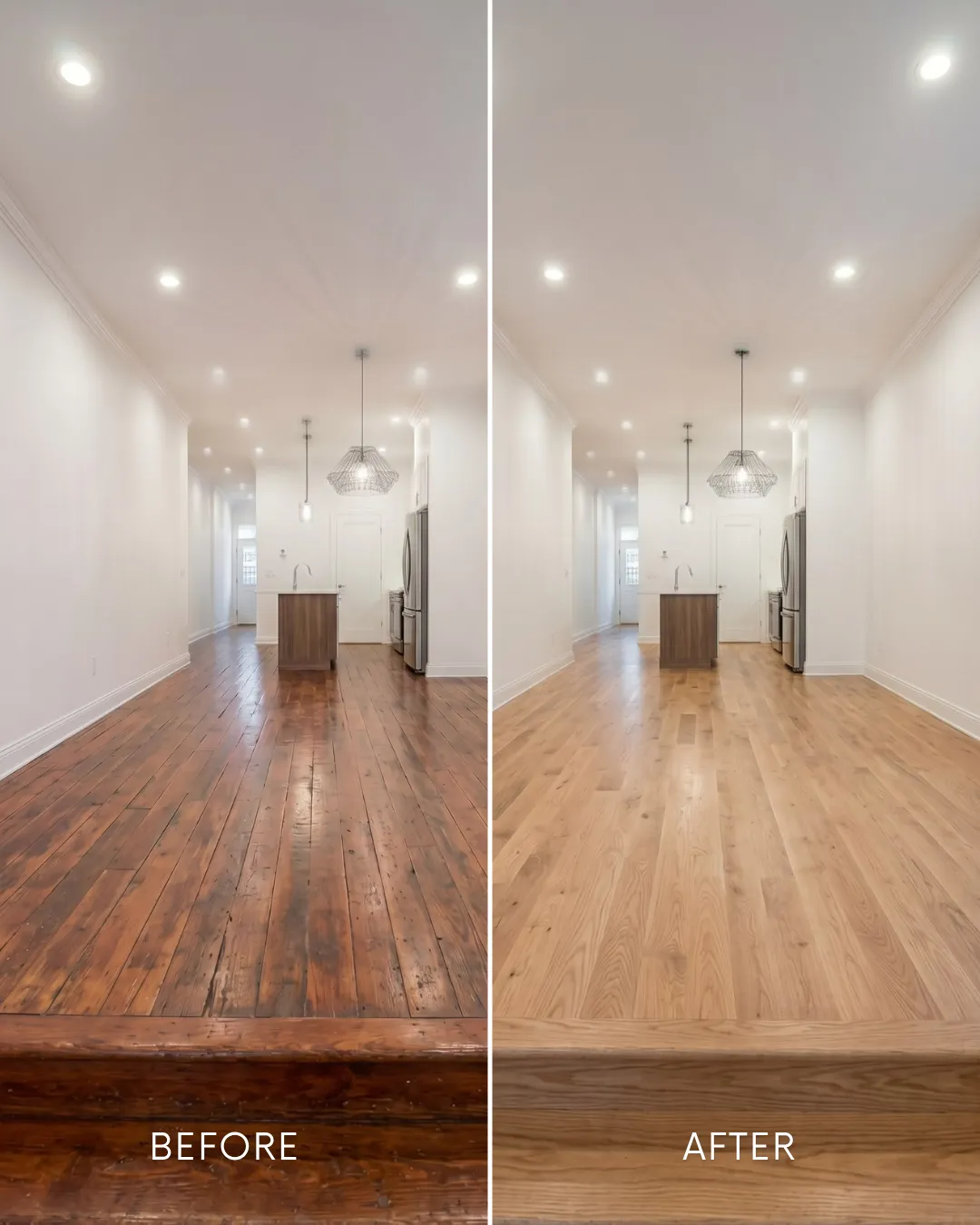
The 3 Key Conditions for Successful Sandless Refinishing
For refinishing hardwood without sanding to be effective, your floors must meet specific criteria. If any of these conditions aren’t met, you risk wasting money on a treatment that won’t deliver the desired results.
1. Intact Polyurethane Finish
The most critical factor is that your existing polyurethane finish must be largely intact. Sandless refinishing relies on having a sound, adhesive layer to bond with. If the finish has worn through to the bare wood in significant areas, a screen-and-recoat won’t work. The new finish won’t adhere properly to exposed wood, leading to peeling and an uneven appearance.
2. Surface-Level Wear Only
This method is strictly for cosmetic surface wear. Think light scuffs, minor dullness, and superficial scratches that haven’t penetrated the finish. If you have deep gouges, significant abrasions, or areas where the wood fibers are visible, sandless refinishing won’t hide or repair them. For issues like these, you’ll need a full sanding to remove the damage. You can learn more about how deep scratches disappear after sanding hardwood floors.
3. No Desire for Color Change or Stain Removal
Because sandless refinishing only works on the surface of the existing finish, it cannot change the color of your floors. If you want a different stain color, or if your floors have significant pet stains, water damage, or dark spots that have discolored the wood, a full sanding is the only way to address these issues. The new topcoat will only seal in the existing color and any underlying blemishes.
What Sandless Refinishing Can’t Do
It’s important to set realistic expectations for what refinishing hardwood without sanding can and cannot achieve. Many homeowners are drawn to the idea of a quick fix, but often overlook the limitations.
Cannot Change Floor Color or Stain
As mentioned, a screen-and-recoat won’t alter your floor’s color. If you’re tired of your current stain or want to update to a trendy new shade, you’ll need a full professional sanding and refinishing. This process removes the old finish and stain, allowing for a fresh application.
Cannot Fix Deep Gouges or Scratches
Deep damage goes beyond the surface. Scratches that catch your fingernail, dents, and gouges penetrate the protective finish and often the wood itself. Sandless methods will simply apply a new coat over these imperfections, making them potentially more noticeable.
Cannot Remove Pet Stains or Water Damage
Pet urine and water stains can penetrate deep into the wood, causing dark discoloration and even structural damage. These types of stains require sanding down to clean wood, and sometimes even board replacement, which is far beyond the scope of a screen-and-recoat. Applying a new finish over these areas will trap the odor and visual damage underneath.
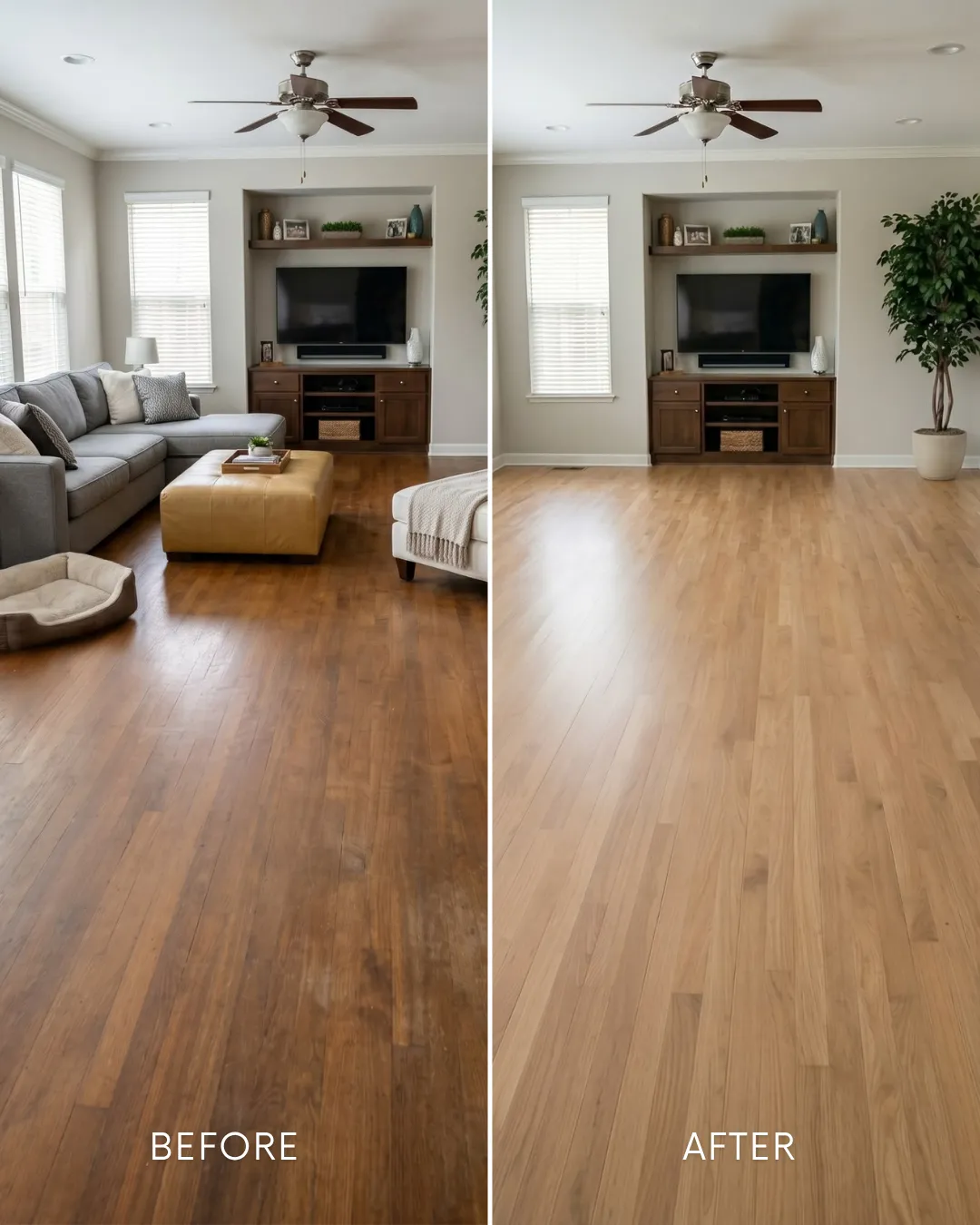
Realistic Lifespan: What to Expect from a Screen-and-Recoat
A key question for homeowners considering refinishing hardwood without sanding is how long the results will last. While a full refinish can last 10-20 years or more with proper care, a screen-and-recoat offers a much shorter lifespan.
- 3–5 Years of Extended Protection: Generally, a well-executed screen-and-recoat can extend the life of your floor’s finish by another 3 to 5 years. This assumes light to moderate traffic and regular maintenance.
- A Bridge, Not a Replacement: Think of it as a temporary refresh between full refinishes. It’s a way to keep your floors looking good and protected without committing to the full process. Bona, a leading floor care manufacturer, often recommends recoating every 3-5 years for optimal maintenance.
- Indicator for Full Refinish: Once your floor shows more significant wear, deep scratches, or areas where the wood is exposed after a few screen-and-coats, it’s a clear sign that a full sanding and refinishing is due.
Understanding this realistic timeframe helps you budget and plan for the long-term care of your hardwood floors. It also ensures you don’t over-expect from a process designed for light maintenance. For information on the full process, you can read about how long hardwood floor refinishing takes.
When Professionals Recommend Sandless Refinishing
While we emphasize the limitations, there are indeed valid scenarios where refinishing hardwood without sanding is the ideal choice.
For Light Wear and Dullness
If your floors are generally in good condition but have lost their luster, show minor surface scuffs, or look a bit dull, a screen-and-recoat can bring back their shine and add a fresh layer of protection. This is particularly true for floors that receive light to moderate foot traffic.
Between Full Refinishes
Many homeowners use sandless refinishing as a periodic maintenance step to prolong the time between major refinishing projects. For example, if you had your floors fully refinished 5 years ago and they’re starting to show minor wear, a screen-and-recoat can extend their beauty for another few years before a full sanding is necessary.
As a Cost-Effective Refresh
The cost of a screen-and-recoat is significantly lower than a full refinish, typically ranging from $1.50 to $3.00 per square foot*, compared to $3.00 to $5.00+ per square foot* for a full sanding and refinishing. This makes it an attractive option for a quick, budget-friendly refresh.
*Pricing varies based on project scope, materials selected, and site conditions. Contact us for a personalized estimate.
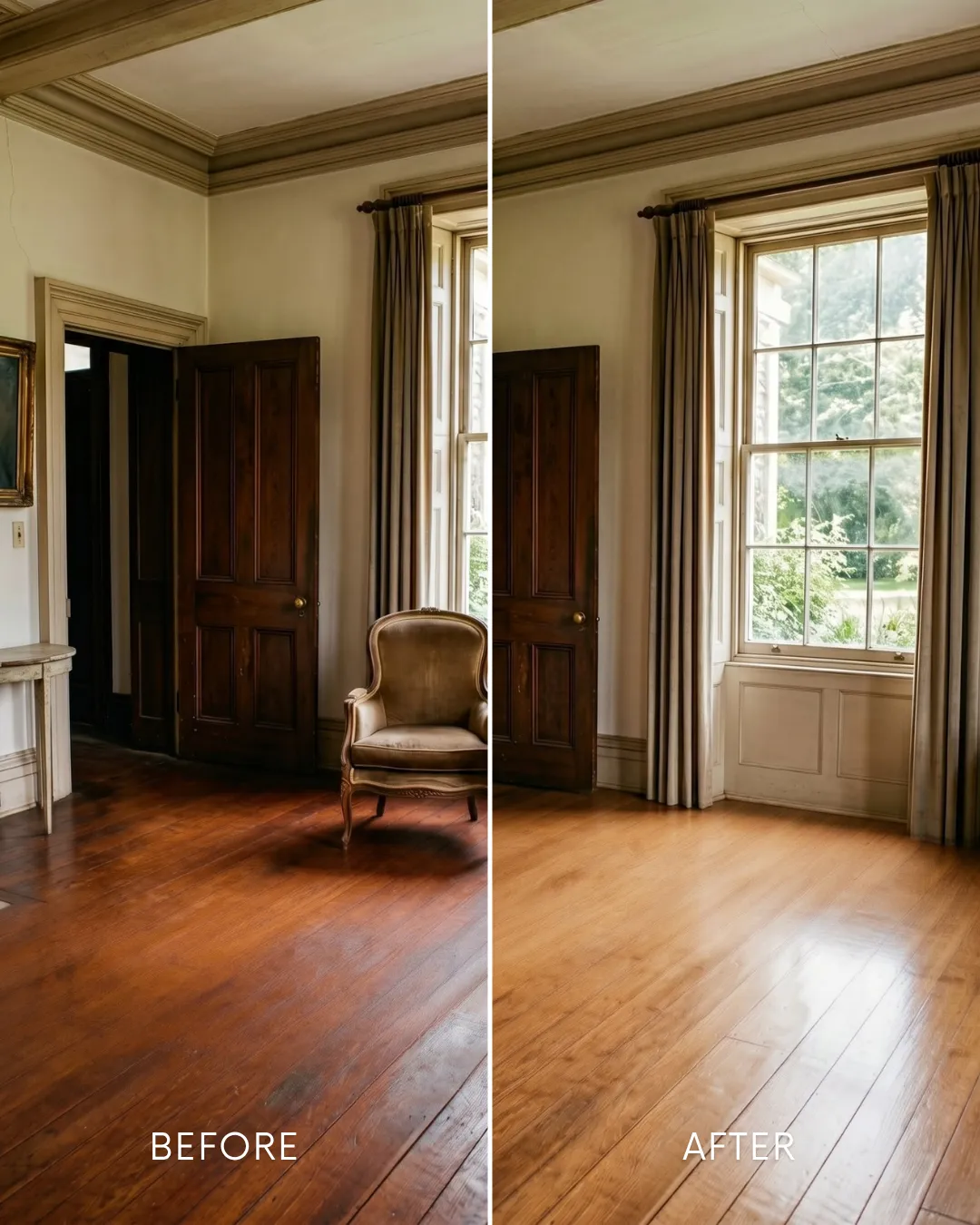
The “Test in a Closet” Rule: Your Best Indicator
Before committing to refinishing hardwood without sanding for your entire home, a professional will often suggest a “test in a closet” or another inconspicuous area. This simple step is invaluable for determining if the process will yield satisfactory results.
- Adhesion Test: The primary purpose is to check how well the new finish adheres to your existing finish. Different finishes and floor cleaners can sometimes create adhesion issues.
- Appearance Check: It allows you to see how the new finish looks over your existing one, ensuring it provides the desired sheen and clarity without highlighting existing damage.
- Damage Visibility: This test will clearly show if existing scratches or stains are still visible (which they almost certainly will be) and if that level of “improvement” is acceptable to you.
If the test area doesn’t look good or if the finish doesn’t adhere properly, it’s a strong indicator that a full sanding and refinishing is the more appropriate and ultimately more satisfying solution for your floors. A reputable and licensed and insured professional will always recommend this diagnostic step.
FAQ
Common questions about refinishing hardwood floors without sanding from homeowners in West Chester and nearby areas.
Can I really refinish hardwood floors without sanding?
Yes, but only for specific situations. Sandless refinishing, or screen-and-recoat, involves lightly abrading the existing finish and applying a new topcoat. It works for floors with intact polyurethane and only surface-level wear, like minor scuffs and dullness. It cannot fix deep damage or change the floor’s color.
What types of damage can sandless refinishing NOT fix?
Sandless refinishing cannot fix deep scratches, gouges, dents, pet stains, water damage, or any areas where the finish has worn through to the bare wood. It also cannot change the color or stain of your hardwood floors.
How long does a sandless hardwood floor refinish last?
A screen-and-recoat typically extends the life of your floor’s finish by 3 to 5 years, assuming light to moderate traffic. It’s considered a maintenance step to delay a full refinish, not a permanent solution.
Is “buff-and-coat” the same as “sandless refinishing”?
Yes, “buff-and-coat” and “screen-and-recoat” are common terms for sandless refinishing. They all refer to the process of lightly abrading the existing finish and applying a new topcoat without sanding down to the bare wood.
When should I choose sandless refinishing over a full sanding?
Choose sandless refinishing if your floors have only light surface wear, are dull, or have minor scuffs, and you are satisfied with the current color. If your floors have deep damage, stains, or you want a color change, a full professional hardwood floor refinishing is necessary.
Do I need to hire a professional for sandless refinishing?
While some DIY kits exist, hiring a professional for sandless refinishing ensures proper adhesion and an even finish. Professionals have the right equipment and expertise to properly prepare the floor and apply the new coats, avoiding issues like peeling or uneven sheen.
Explore Our Hardwood Floor Refinishing Services
- Professional Hardwood Floor Refinishing
- How Long Hardwood Floor Refinishing Takes
- Hardwood Floor Refinishing Cost in West Chester PA
- Will Deep Scratches Disappear After Sanding Hardwood Floors?
Ready to Refresh Your Hardwood Floors in West Chester?
Whether your floors need a light refresh through sandless refinishing or a complete transformation with a full sanding and refinish, our team is here to help. We provide honest assessments and expert service to ensure your hardwood floors look their best. Don’t guess if refinishing hardwood without sanding is right for you — let our licensed and insured professionals evaluate your floors and recommend the best course of action.
Have questions or prefer to speak with an expert directly? Call Us Today: (215) 607-2734