
Blog
Solid vs Engineered Hardwood: Which Is Better for PA Homes (Including Basements)
Choosing between solid and engineered hardwood flooring is a critical decision for any homeowner in Pennsylvania, especially given our region’s varied climate. Both options offer the timeless beauty of wood, but their construction and performance characteristics differ significantly, impacting where and how they can be installed.
Understanding these differences is key to selecting the right floor for your home, whether you’re planning a new solid hardwood floor installation in an upstairs living room or need a durable solution like engineered wood flooring in Pennsylvania for a basement.
Understanding the Core Differences: Solid vs. Engineered Construction
The fundamental distinction between solid and engineered hardwood lies in their construction. This difference directly influences how each type of flooring reacts to environmental factors, particularly moisture and temperature fluctuations common in Pennsylvania homes.
Solid Hardwood: A Single Piece of Timber
Solid hardwood planks are exactly what they sound like: a single, continuous piece of wood, typically ¾ inch thick. This natural composition allows for deep sanding and refinishing multiple times over its lifespan, making it a truly long-term investment. Common species include oak, maple, and cherry.
- Construction: 100% solid wood, milled from a single timber.
- Installation: Primarily nailed down to a wooden subfloor (plywood or OSB).
Engineered Hardwood: Layers of Innovation
Engineered hardwood, on the other hand, is a multi-layered product. It features a top layer of real hardwood veneer (the “wear layer”) glued to several layers of high-quality plywood or high-density fiberboard (HDF). This cross-laminated core provides superior stability.
- Construction: Real wood veneer over a multi-ply or HDF core.
- Installation: Can be nailed, stapled, glued down, or floated, offering more versatility.
Coping with PA Humidity: Cupping, Warping, and Stability
Pennsylvania experiences significant seasonal humidity swings, ranging from dry winters to humid summers. This fluctuating environment is where the structural differences between solid and engineered hardwood become most critical for long-term performance.
Solid Hardwood and Humidity
Solid hardwood naturally absorbs and releases moisture from the air, causing it to expand and contract. If moisture levels are too high or too low, or change too rapidly, solid wood can react by cupping (edges higher than the center) or crowning (center higher than the edges). Severe cases can lead to gaps, buckling, or even cracking. The National Wood Flooring Association (NWFA) recommends maintaining indoor relative humidity between 35-65% for optimal solid wood performance, which can be challenging in PA without proper HVAC control.
- Behavior: Prone to cupping, crowning, and gapping with humidity swings.
- Best for: Environments with stable humidity control, typically above-grade rooms.
Engineered Hardwood and Humidity
Engineered hardwood’s cross-laminated core significantly mitigates these issues. The alternating grain directions of the plywood layers provide dimensional stability, making it far less susceptible to cupping, crowning, or gapping due to moisture changes. This inherent stability is why engineered wood is often recommended for areas where solid wood wouldn’t thrive.
- Behavior: Highly stable; resistant to warping and cupping.
- Best for: Basements, concrete slabs, and homes with inconsistent humidity.
Where Solid Hardwood Shines: Longevity and Refinishing Potential
Despite its sensitivity to moisture, solid hardwood remains a premium choice for many homeowners, particularly those looking for maximum longevity and the ability to frequently refresh their floors.
Above-Grade Rooms and Long-Term Ownership
For main living areas, bedrooms, and hallways above ground level, especially in homes you plan to own for 20+ years, solid hardwood is an excellent investment. Its classic look and feel are unmatched.
- Ideal Locations: Living rooms, dining rooms, bedrooms, and hallways on upper floors.
- Refinishing Potential: Can be sanded and refinished 5–7 times, effectively renewing the floor over decades.
- Resale Value: Often adds significant resale value due to its durability and timeless appeal.
The Refinishing Reality
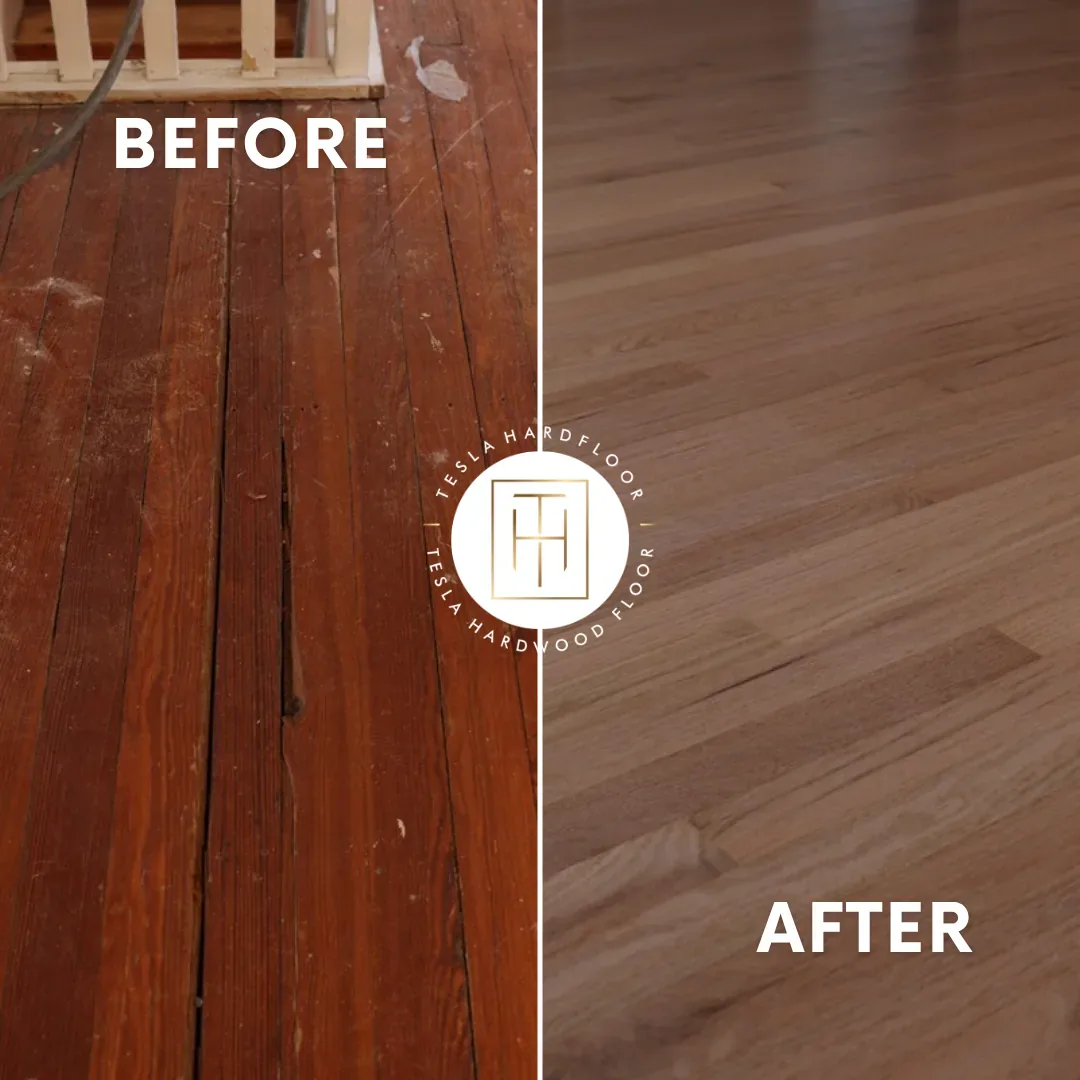
The ability to refinish solid hardwood is its greatest advantage. Each sanding removes a thin layer of wood, erasing scratches, dents, and wear, allowing for a fresh stain and finish. This process can extend the life of your floor for generations. Homeowners in West Chester often choose solid wood for its enduring beauty and the option to change its look with refinishing.
Where Engineered Hardwood Excels: Versatility and Problem-Solving
Engineered hardwood’s unique construction makes it the superior, and often only, choice for several challenging installation scenarios in Pennsylvania homes.
Basements and Concrete Subfloors
This is where engineered hardwood truly stands out. Basements are prone to higher humidity and potential moisture issues, which would quickly damage solid wood. Since concrete subfloors cannot be nailed into, engineered wood can be glued down directly or installed as a floating floor, making it the ideal solution for below-grade applications. This Old House provides a great explanation of engineered hardwood’s benefits in these scenarios.
Radiant Heat Systems
Radiant floor heating can cause significant temperature fluctuations that solid wood struggles to handle. Engineered hardwood’s stable core makes it an excellent choice over radiant heat, as it’s less likely to warp or gap. Always check with the manufacturer for specific compatibility.
Condos and Glue-Down Requirements
Many condo associations have rules against nailed-down floors to minimize noise transfer to units below. Engineered hardwood can be glued directly to the subfloor or installed as a floating floor, complying with these HOA regulations while still providing the look of real wood.
Refinishing Reality for Engineered Wood
While not as frequently refinishable as solid wood, many engineered products with a thicker wear layer (typically 3mm or more) can be sanded and refinished 1-3 times. This extends their life significantly, though not to the same extent as solid hardwood.
Cost Trade-Offs: Initial Investment vs. Long-Term Value
When considering the cost, it’s important to look beyond the initial purchase price and evaluate the long-term value, including installation, maintenance, and potential for refinishing.
Initial Material Cost
Generally, the material cost for engineered hardwood can range from slightly less to significantly more than solid hardwood, depending on the wood species, wear layer thickness, and manufacturer. Exotic species or very thick wear layers on engineered wood can sometimes exceed the cost of common solid hardwoods.
Installation Costs
Installation methods for engineered hardwood can be more varied (glue-down, floating, nail-down), potentially influencing labor costs. Solid hardwood typically requires a nail-down installation, which is a specialized skill. For engineered wood in Blue Bell, installation costs will vary based on the method chosen and the complexity of your space.
Long-Term Value and Refinishing
Solid hardwood, with its multiple refinishing cycles, often represents a lower cost per year over a very long lifespan (50-100+ years). Engineered hardwood with a thick wear layer also offers good long-term value, but its ultimate lifespan, while substantial, may not match that of solid wood due to fewer refinishing opportunities.
FAQ
Here are some frequently asked questions about solid vs engineered hardwood in Pennsylvania:
Can I install solid hardwood in my Pennsylvania basement?
It is strongly advised against installing solid hardwood in a basement in Pennsylvania. Basements are prone to higher humidity levels and potential moisture issues, which can cause solid wood to warp, cup, or buckle. Engineered hardwood is the recommended choice for basements due to its superior moisture resistance.
How many times can engineered hardwood be refinished?
The number of times engineered hardwood can be refinished depends on the thickness of its top wear layer. Engineered floors with a wear layer of 3mm or more can typically be sanded and refinished 1 to 3 times. Thinner wear layers may not allow for any refinishing.
Is engineered hardwood real wood?
Yes, engineered hardwood is real wood. It features a top veneer layer of genuine hardwood (the same species found in solid wood) over a multi-ply core. This means you get the look and feel of real wood with enhanced stability.
Which is more expensive, solid or engineered hardwood?
The cost can vary greatly depending on the species, quality, and wear layer thickness. Generally, solid hardwood and high-quality engineered hardwood can be comparable in price. Some exotic or premium engineered options can even be more expensive than common solid hardwoods.
Can I install solid hardwood over concrete?
No, solid hardwood cannot be directly installed over a concrete slab. It requires a plywood subfloor to be nailed down. Engineered hardwood, however, can be glued directly to concrete or installed as a floating floor, making it ideal for concrete subfloors.
Why is engineered hardwood better for humid climates like Pennsylvania?
Engineered hardwood’s cross-laminated plywood core provides enhanced dimensional stability, making it far more resistant to the expansion and contraction caused by the humidity swings common in Pennsylvania. This reduces the risk of cupping, crowning, and gapping compared to solid hardwood.
Related Posts
- Engineered Wood Flooring: The Complete Guide
- Everything You Need to Know About Hardwood Flooring
- Engineered Wood Flooring Installation in Blue Bell, PA
- Hardwood Floor Refinishing: Restore Your Floors
- The Hardwood Floor Installation Process Explained
- Common Hardwood Floor Repairs and Solutions
Ready to Choose Your Perfect Floor?
Deciding between solid and engineered hardwood depends on your specific home, lifestyle, and budget. For expert advice tailored to your Pennsylvania property, trust Tesla Hardfloor. We’re here to help you make the best choice for your investment, ensuring your new floors are beautiful and perform exceptionally, whether you’re considering solid or engineered hardwood in PA.
Prefer a direct link? https://teslahardwoodfloor.com/#form