
Blog
Custom Hardwood Border Inlays: Where They Make Sense (And Where They Don’t)
Custom hardwood border inlays are a distinctive design choice, framing your floor with a contrasting band of wood that elevates the entire room. They can transform an ordinary space into something truly memorable, much like a finely crafted rug defines an area.
However, like any premium design element, a hardwood border inlay isn’t suited for every space. Understanding where they enhance a room and where they might detract is key to achieving a truly cohesive and elegant look. Let’s explore the nuances of these unique flooring features.
Hardwood border inlays add a contrasting wood band 6–12 inches inside the room perimeter, framing the floor like a rug. They make sense in formal rooms (foyer, dining room, library) over 200 sq ft. In small rooms, narrow hallways, or open-concept spaces, borders fragment the floor visually and reduce perceived size.
What Exactly is a Hardwood Border Inlay?
A hardwood border inlay is a decorative element created by installing a band of wood, often of a different species, color, or grain pattern, around the perimeter of a room’s main hardwood floor. This border is typically 6 to 12 inches wide, running parallel to the walls, and is meticulously integrated into the main flooring. The goal is to create a visual frame, drawing the eye inward and adding a layer of sophistication and bespoke craftsmanship. Imagine a room-sized picture frame for your floor.
These inlays are distinct from simple perimeter boards; they are often made from contrasting wood species, feature intricate patterns (like a Greek key or a herringbone strip), or use a different cut of wood to create a striking visual effect. According to the National Wood Flooring Association (NWFA), decorative inlays require precise cuts and expert installation to ensure durability and a seamless appearance, highlighting the skill involved in their creation.
Best Rooms for a Hardwood Border Inlay
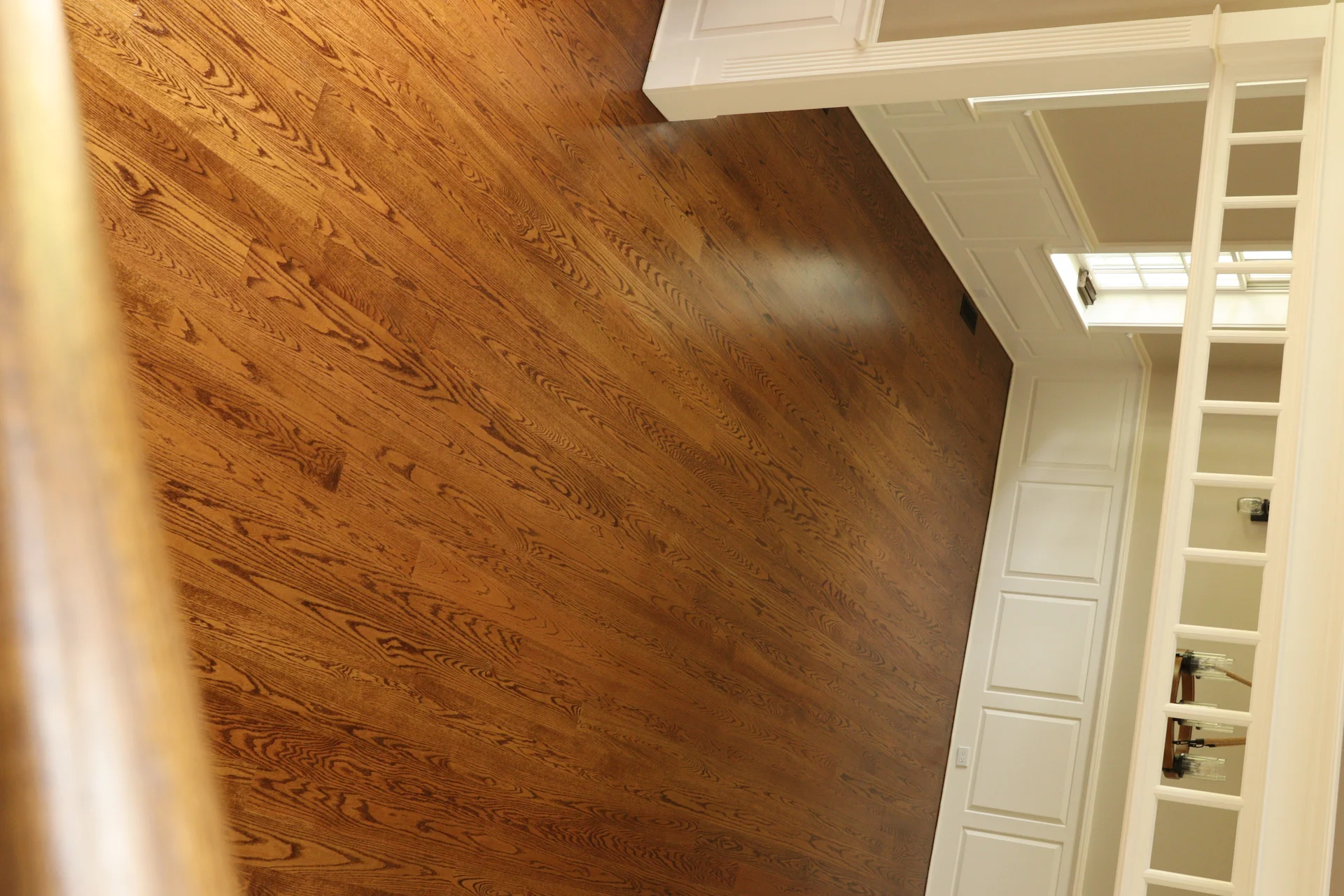
For a hardwood border inlay to truly shine, it needs space and a specific aesthetic context. They are best suited for rooms where you want to create a sense of formality, grandeur, or distinct zones.
- Grand Foyers and Entryways: A border inlay here makes a powerful first impression, guiding visitors into your home and setting an elegant tone. It can perfectly frame a central rug or a chandelier.
- Formal Dining Rooms: These spaces are often designed for entertaining and special occasions. A border inlay defines the dining area, adding a layer of luxury and traditional charm that complements fine furniture.
- Libraries or Studies: In rooms dedicated to quiet contemplation or work, a border inlay can enhance the classic, sophisticated atmosphere, making the space feel more curated and distinguished.
- Primary Bedrooms: For a truly opulent master suite, a border inlay can frame the sleeping area, adding a touch of bespoke design that elevates the room beyond standard flooring.
The key is room size. Inlays thrive in larger rooms, generally those over 200 square feet, where the border doesn’t overwhelm the main field of the floor. They work best in spaces with clear boundaries, allowing the design to fully unfold without interruption.
Worst Rooms for a Hardwood Border Inlay
While border inlays offer undeniable appeal, placing them in unsuitable areas can lead to a cluttered, busy, or visually shrinking effect.
- Small Rooms (under 150 sq ft): A border in a compact space can make the room feel even smaller and more confined. The floor becomes too “busy,” losing the elegant impact.
- Narrow Hallways: In a hallway, a border can create a tunnel effect, making the space feel tighter and less inviting. It also fragments the visual flow, which is crucial in transitional areas.
- Open-Concept Living Areas: While tempting, inlays in open-concept spaces can visually chop up the floor, disrupting the seamless flow that defines these layouts. Instead of defining, they can create awkward divisions.
- Kitchens: Kitchens are high-traffic, practical spaces. The intricate nature of an inlay can get lost amidst cabinetry and appliances, and the added complexity of installation might not be worth the minimal visual return.
- Bathrooms: Similar to kitchens, bathrooms are often too small and functional for a border inlay to make a meaningful design statement.
The goal of a border inlay is to enhance, not to distract. In these less-than-ideal scenarios, a simple, continuous hardwood flooring installation often provides a cleaner, more expansive feel.
Striking Wood Combinations for Your Inlay
The true artistry of a hardwood border inlay often comes from the thoughtful combination of different wood species. The contrast in color, grain, and even hardness can create stunning visual effects.
- Walnut on White Oak: A popular choice, the deep, rich tones of walnut provide a sophisticated contrast against the lighter, often cooler hues of white oak. This creates a classic, elegant look. For more on these popular choices, see our guide on white oak vs. red oak flooring.
- Ebony on Red Oak: For a dramatic, high-contrast statement, ebony’s near-black color against the warm, reddish undertones of red oak is a bold choice. This works exceptionally well in very formal or contemporary settings.
- Maple on Cherry: The pale, fine grain of maple can offer a beautiful, subtle contrast to the warmer, often deeper red tones of cherry. This combination is softer, yet still very refined.
- Exotic Woods: Incorporating exotic species like Brazilian Cherry (Jatoba) or Wenge can introduce unique colors and patterns, but careful consideration of their hardness and stability is essential.
The choice of finish also plays a role. A different sheen, such as a matte main floor with a satin border, can further enhance the visual separation without requiring a different wood species. Understanding hardwood floor finish types can help you make an informed decision.
Installation Complexity and What to Expect
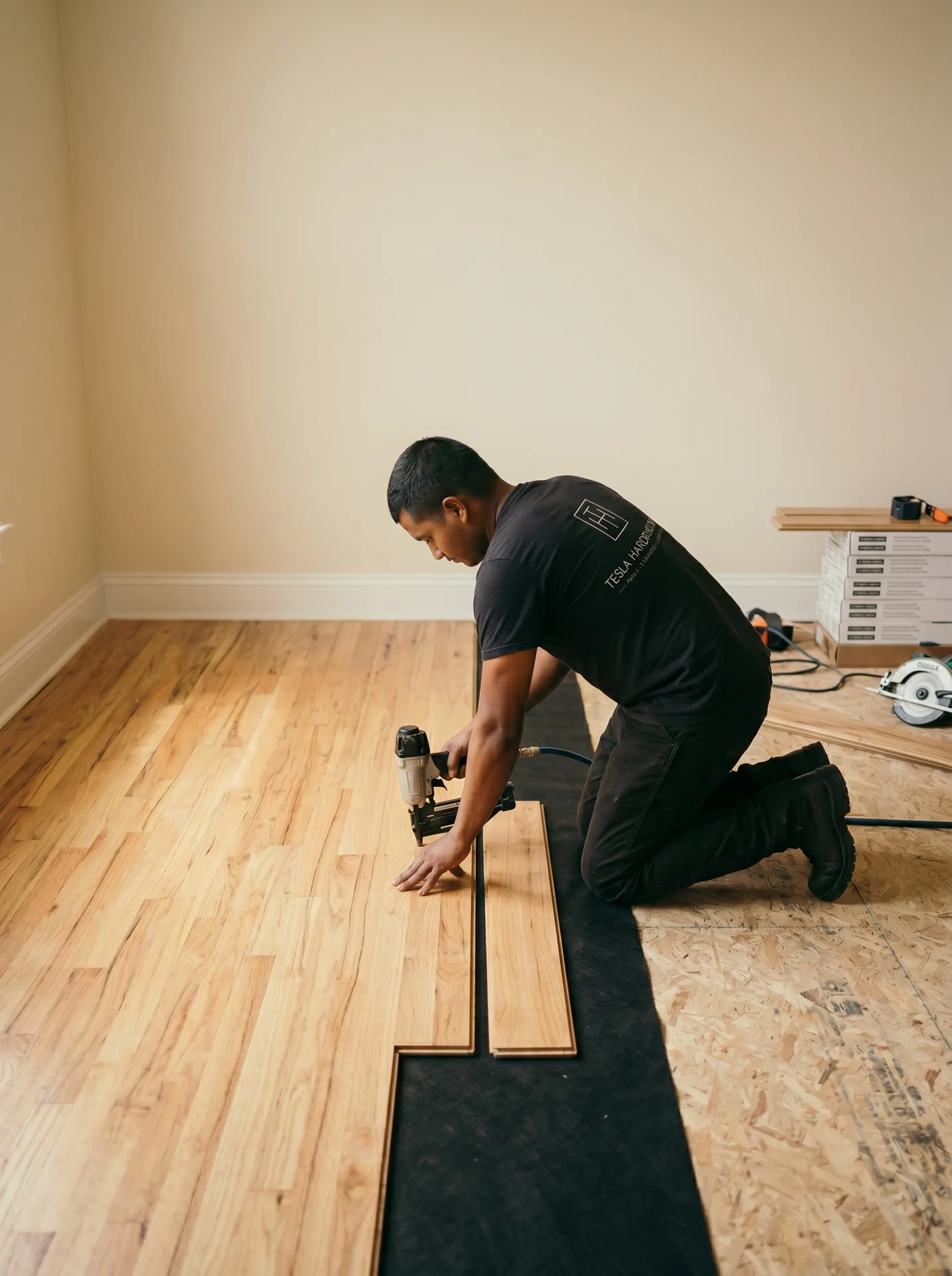
Installing a hardwood border inlay is a highly specialized skill, demanding precision and extensive experience. It’s significantly more complex than a standard hardwood flooring installation in Lower Merion, PA.
- Detailed Planning: Every measurement must be exact. The layout, angles, and transitions need to be perfectly planned to ensure the border aligns seamlessly with the room’s architecture.
- Precision Cutting: Custom jigs and specialized tools are used to cut the border pieces and the main field flooring with extreme accuracy. Any deviation can result in visible gaps or an uneven appearance.
- Wood Acclimation: Different wood species used in an inlay must be properly acclimated to the home’s environment to minimize movement and gapping after installation. This is crucial for the long-term integrity of the design.
- Skilled Installation: The actual laying of the border requires a steady hand and a deep understanding of wood characteristics. The installer must ensure a tight fit and a flush surface between the border and the main floor.
- Finishing: Sanding and finishing an inlaid floor must be done carefully to preserve the distinctness of each wood type while achieving a uniform, smooth surface.
Because of this complexity, the process typically takes longer and requires a highly skilled, licensed, and insured professional team. The investment reflects the craftsmanship and expertise involved in creating such a custom feature. Wood Floor Business magazine frequently highlights custom installations, emphasizing the intricate work involved in achieving bespoke designs.
FAQ
Common questions about custom hardwood border inlays for homeowners.
What is a hardwood border inlay?
A hardwood border inlay is a decorative band of contrasting wood, typically 6-12 inches wide, installed around the perimeter of a room’s main hardwood floor. It frames the room, adding a custom, luxurious touch to the flooring design.
Where are hardwood border inlays best suited?
Hardwood border inlays are ideal for larger, more formal rooms such as grand foyers, formal dining rooms, libraries, or spacious primary bedrooms. They work best in spaces over 200 square feet where the design can be fully appreciated.
Do border inlays increase installation complexity?
Yes, installing a hardwood border inlay significantly increases the complexity of the installation. It requires precise measurements, intricate cuts, careful wood acclimation, and highly skilled craftsmanship to ensure a seamless and durable finish.
Can I choose different wood species for my inlay?
Absolutely. The beauty of a border inlay often comes from combining different wood species, such as walnut on white oak, ebony on red oak, or maple on cherry, to create striking contrasts in color and grain.
Are border inlays suitable for small rooms?
Generally, no. In small rooms (under 150 sq ft) or narrow hallways, a border inlay can make the space feel smaller and visually cluttered, detracting from the overall aesthetic rather than enhancing it.
How do I get a quote for a custom hardwood border inlay?
To discuss a custom hardwood border inlay for your home and receive a personalized estimate, please call or visit our showroom for current options and design consultations. We offer free in-home estimates.
Explore Our Hardwood Flooring Services
- Comprehensive Hardwood Flooring Solutions
- Hardwood Flooring Installation in Lower Merion, PA
- Choosing Between White Oak and Red Oak Flooring
- Hardwood Floor Installation vs. Refinishing
- Solid vs. Engineered Hardwood for PA Homes
- Understanding Hardwood Floor Finish Types
Ready to Design Your Custom Hardwood Border Inlay?
If you’re considering a custom hardwood border inlay to add a touch of unique elegance to your home, our licensed and insured team is ready to bring your vision to life. We offer on-site consultations to discuss design options and provide a detailed plan for your bespoke flooring project.
Prefer to call? (215) 607-2734