
Blog
Site-Finished vs. Prefinished Hardwood Floors: Which Is Right for Your Blue Bell, PA Home?
Choosing between site finished vs prefinished hardwood in Blue Bell, PA comes down to one question: where do you want the finish to be applied, in a factory or in your home? Both give you real wood. The difference is the look, the timeline, and how the floor can be restored later.
This guide explains each option in plain language, compares them side by side, and shows how to decide. If you already know you want a custom look, start with our hardwood flooring in Blue Bell, PA service page.
Site Finished vs Prefinished Hardwood in Blue Bell PA: The Short Answer
Neither option is better for every home. Each one solves a different problem. The right pick depends on your style, your schedule, and the rooms you are planning.
What “site-finished” hardwood means
Site-finished floors start as raw, unfinished boards. The boards are nailed down, then sanded flat on site. After that, the floor is stained (if you want a color) and sealed with several coats of finish.
- Surface: flat from wall to wall, with seams sealed by the finish.
- Color: any stain you can imagine, mixed and tested on your own boards.
- Timeline: longer, because each coat needs time to dry and cure.
What “prefinished” hardwood means
Prefinished boards arrive with stain and finish already applied. Factories cure the coating in controlled conditions, often with a hard, wear-resistant top layer. Once the boards are installed, the floor is ready to use.
- Surface: each board has slightly beveled edges, so you see fine grooves between boards.
- Color: limited to what the manufacturer offers.
- Timeline: faster, with no sanding or drying time inside the home.
Side-by-Side: How the Two Compare
Here is how the two options differ in the areas homeowners ask about most. Each point stands on its own, so jump to the one that matters to you.
Look and finish quality
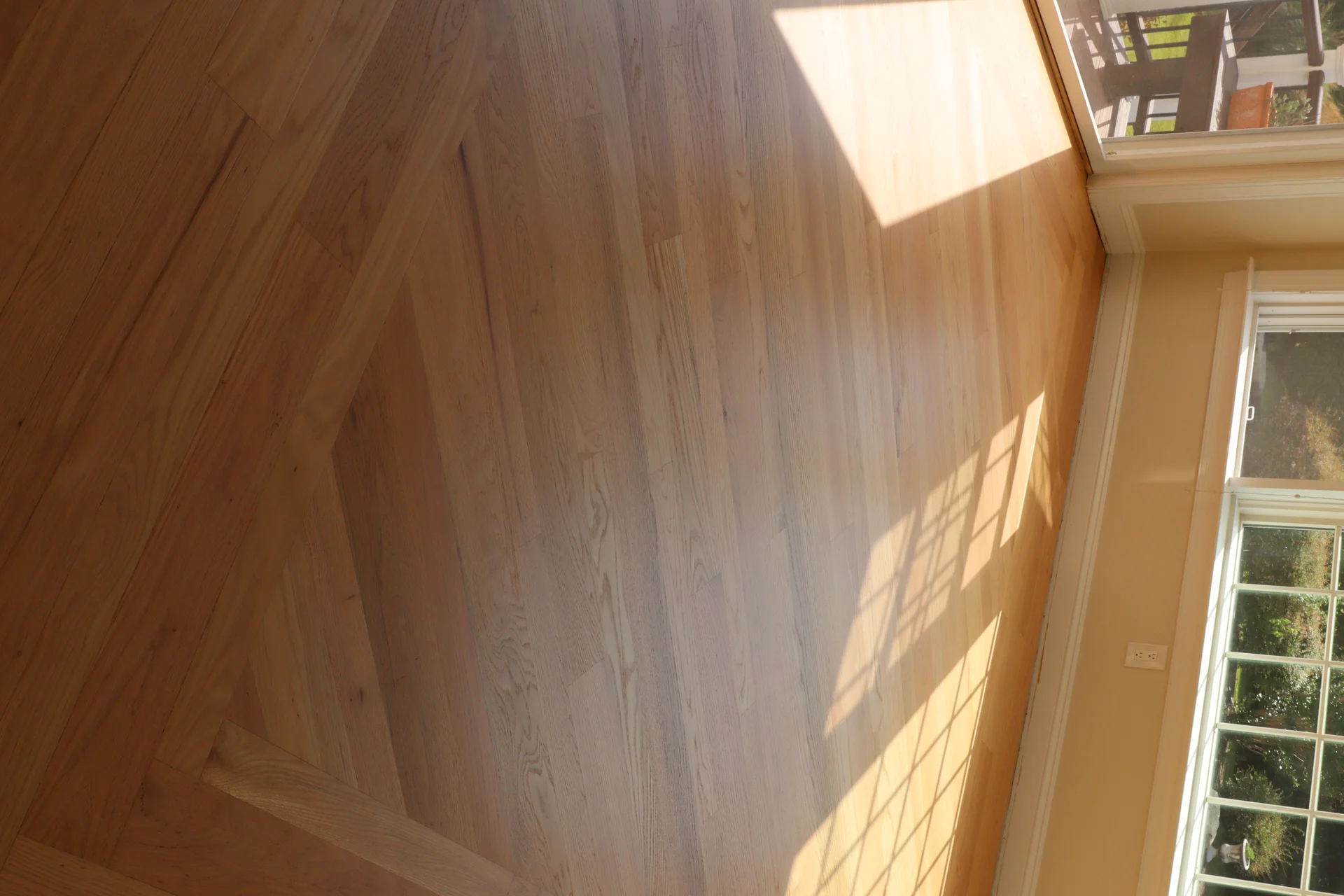
A site-finished floor reads as one continuous surface. There are no bevels, so light moves across the room without breaking at every seam. This is why many buyers choose it for open layouts, grand entries, and rooms with strong natural light.
Prefinished floors have a clean, uniform look too. The bevels add a plank-by-plank character that some people love. Factory color is also very consistent from board to board.
Durability and everyday wear
Factory finishes are applied in a controlled setting and are known for toughness. Site finishes depend on the craftsmanship of the crew, the products used, and the drying conditions. A well-applied site finish is also very durable, and it can be touched up or renewed in place.
- Prefinished: strong, even factory coating from day one.
- Site-finished: sealed across the whole floor, which helps limit moisture getting into seams.
Disruption during the job
Installing prefinished boards is quicker and has little dust. Site finishing adds sanding and coating days, plus the smell of finish while it cures. With a good plan, both are manageable. Our hardwood installation preparation checklist shows how to get ready.
Repairs and future refinishing
Both floors can be repaired when a board is damaged. Matching a prefinished board later can be harder if the product is discontinued. Site-finished floors are easier to blend, because the finish is renewed across the whole surface. We cover this in how to match new hardwood with your existing floors.
Solid vs. Engineered: Can You Finish Engineered Hardwood?
The type of board matters as much as the finish method. Solid and engineered hardwood behave differently, and that changes your options.
Solid hardwood
Solid boards are real wood all the way through. A three-quarter-inch solid board has roughly a quarter inch of wood above the tongue, so it can be sanded and refinished several times over its life. Species such as white oak and red oak are popular choices, and our guide to white oak vs red oak flooring explains how they differ.
Engineered hardwood
Engineered boards have a real-wood top layer bonded to a stable core. They handle humidity swings better, which helps in homes with basements or seasonal changes. Many people ask whether engineered boards can be finished on site. They can, if the top layer is thick enough. As a general rule, a wear layer of about 3 mm or more can take a full sanding. Thin layers cannot.
For a deeper comparison, read solid vs engineered hardwood for PA homes.
Humidity and Pennsylvania seasons
Wood moves with moisture. The National Wood Flooring Association recommends keeping indoor relative humidity roughly between 30% and 50% to protect hardwood. You can read more at the National Wood Flooring Association. Boards should also rest in the home to adjust before installation, no matter which finish you choose.
Refinishing: Why Site-Finished Floors Age Gracefully
Every hardwood floor wears over time. Refinishing is how a floor is renewed instead of replaced. Understanding it helps you pick the right option today.
How refinishing works
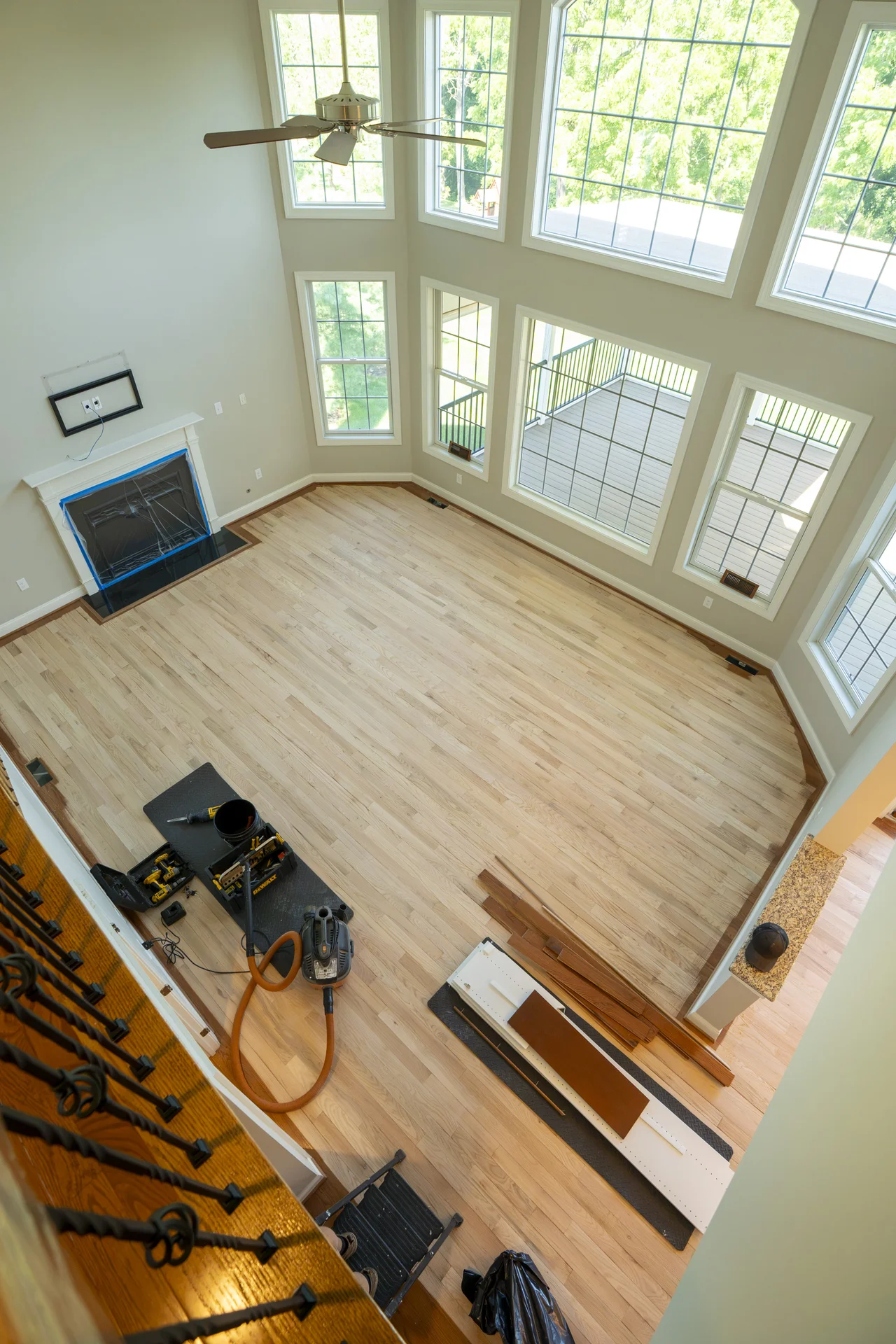
Refinishing removes the worn finish by sanding, then repairs dents and gaps. If you want a new color, stain is applied next. Several coats of protective finish follow, with drying time between each.
- Sand: the old finish and surface wear come off.
- Repair: damaged areas are filled or replaced.
- Stain (optional): color is applied evenly.
- Seal: protective coats lock in the look.
How many times can a floor be refinished?
A solid hardwood floor can often be refinished several times. The exact number depends on board thickness and how carefully each sanding was done. Our article on how many times you can refinish hardwood floors gives a realistic view. For timing, see how long hardwood floor refinishing takes.
Where prefinished floors fit
A prefinished floor with a thick top layer can also be refinished later. The bevels will usually be sanded away in the process, which turns it into a flat, seamless surface. If long-term renewal matters to you, ask about professional hardwood floor refinishing before you choose boards.
How to Decide for Your Home (and Plan the Order)
A short checklist makes the choice easier. Answer these honestly and the right direction usually shows itself.
Choose site-finished if you want
- A custom stain or a color match to existing floors.
- A flat, seamless look across large rooms.
- A floor you can renew in place for years.
- Special details such as herringbone or border inlays.
Choose prefinished if you want
- The shortest time between install and move-in.
- Less dust and fewer fumes inside the home.
- A proven factory color and coating.
- A simple, predictable project.
How much hardwood flooring do you need?
Measure each room’s length and width, then multiply to get square feet. A 12×12 room is 144 square feet. Add 5 to 10 percent for cuts and waste, so that room needs roughly 151 to 158 square feet of material. Patterns such as herringbone need a little more.
Plan around the season
Interest in hardwood is highest in the fall. According to Google Keyword Planner data from the last 12 months, searches for “hardwood flooring” in New Jersey and Pennsylvania peak in October at about 8,100 per month and drop to about 5,400 in June. Schedules fill up when demand rises, so it helps to ask early.
What we do for you
We come to you for a free in-home estimate. Our licensed and insured crew looks at your subfloor, your layout, and your lifestyle, then recommends what fits. You can also explore our flooring services in Blue Bell, PA and our guide to installation vs refinishing.
FAQ
Common questions from homeowners comparing site-finished and prefinished hardwood floors.
Site finished vs prefinished hardwood: which is better for a Blue Bell, PA home?
Neither is better for every home. Site-finished floors give a flat, seamless surface and a fully custom stain. Prefinished floors install faster with less disruption and a factory-applied finish. We walk your space and recommend the better fit during a free in-home estimate.
Can you finish engineered hardwood?
Yes, if the wear layer is thick enough. Engineered boards with a real-wood top layer of about 3 mm or more can generally be sanded and refinished. Very thin layers cannot take a full sanding, so we check the board before promising a result.
Is prefinished hardwood better than unfinished?
It depends on your priorities. Prefinished is better for speed and a tough factory coating. Unfinished boards finished on site are better for custom color, a flat surface, and sealed seams. Both are real hardwood and both can last for decades with good care.
How much hardwood flooring do I need for a 12×12 room?
A 12×12 room is 144 square feet. Add 5 to 10 percent for cuts and waste, so plan on roughly 151 to 158 square feet of material. Diagonal layouts such as herringbone usually need a little more.
How does hardwood floor refinishing work?
Refinishing removes the old finish by sanding, repairs damage, then applies stain if you want a color change and several coats of protective finish. Each stage needs drying time, so the process takes several days depending on the size of the space and the finish chosen.
How much does hardwood flooring cost?
Cost depends on species, grade, board width, layout, the finish method, and the condition of the subfloor. Every home is different, so request a free estimate and we will give you a clear quote for your actual project.
Related Posts
- Hardwood Floor Installation vs. Refinishing: How to Choose
- Solid vs. Engineered Hardwood for PA Homes
- White Oak vs. Red Oak Flooring
- Matte vs. Satin vs. Semi-Gloss Hardwood Finishes
- How to Care for Newly Refinished Hardwood Floors
- Hardwood Floor Refinishing in Blue Bell, PA
Ready to Choose the Right Hardwood Floor?
When you weigh site finished vs prefinished hardwood in Blue Bell, PA, the best answer starts with your home, your style, and your timeline. Request a free estimate and we will help you choose a floor you will love for years.
Prefer to talk it through? +1 (215) 607-2734