
Blog
Water-Based vs. Oil-Based Polyurethane for Hardwood Floor Refinishing in Lower Merion, PA
Choosing between water based vs oil based polyurethane in Lower Merion, PA comes down to three things: the color you want, how fast you need your rooms back, and how your household lives on the floor. Water-based finishes stay clear and dry fast. Oil-based finishes add a warm amber glow that deepens with time.
Both can look beautiful on a fine hardwood floor. The right one depends on your wood species, your light, and the feel you want in the room. This guide walks through each finish the way a refinishing crew thinks about it — so you can make a confident, informed choice before the first coat goes down.
Water based vs oil based polyurethane in Lower Merion, PA: the core differences
Polyurethane is the clear protective layer that sits on top of sanded and stained wood. It is what takes the daily wear — shoes, chair legs, pet claws — so the wood itself does not. The two families differ in what carries the resin: water or mineral spirits. That one difference changes color, smell, dry time and the look of the finished floor.
Color and how it ages
Oil-based polyurethane goes on with a honey tint and keeps ambering for years. On red oak, it warms the pink tones into a classic golden brown. Water-based polyurethane dries nearly clear and stays that way. It keeps white oak pale, gray stains cool and natural floors true to the raw wood.
- Pick oil-based if you want warmth, depth and a traditional, collected-over-time look.
- Pick water-based if you want a light, Scandinavian or contemporary look that will not yellow.
Odor and indoor air
Oil-based finishes release more volatile organic compounds (VOCs) while they dry, and the smell can linger for several days. The U.S. EPA notes that many coatings release VOCs and that concentrations indoors can run well above outdoor levels during and after use. Water-based products are much lower in VOCs, which is why families with young children, pets or sensitive lungs often prefer them.
Dry time and how soon you get your home back
Water-based coats usually dry in two to four hours, so a crew can often apply several coats in one day. Oil-based coats typically need eight to twelve hours or more between coats, which adds days to the schedule. For a full timeline, see our guide on how long hardwood floor refinishing takes.
Durability: which finish holds up better?
A common belief is that oil-based is always tougher. That was true decades ago. Today, a quality two-component water-based finish — one mixed with a hardener on site — is among the most wear-resistant options available for residential floors.
How each finish wears
- Oil-based: builds a thicker film per coat and feels soft-tough. Scratches tend to blend into the amber tone.
- Single-component water-based: thinner per coat, so more coats are needed. Good for bedrooms and low-traffic rooms.
- Two-component water-based: very hard and abrasion-resistant. A strong fit for kitchens, entries and homes with large dogs.
Why the number of coats matters
Because water-based films are thinner, a crew usually applies three to four coats where oil-based might need two to three. Skipping a coat to save time leaves less protection, and the floor wears through to bare wood sooner. This is one reason a careful process matters more than the label on the can.
Sheen is a separate choice
Both types come in matte, satin and semi-gloss. Lower sheens hide scratches and dust better, which is why satin and matte dominate in high-end homes today. Compare them in our guide to matte, satin and semi-gloss finishes.
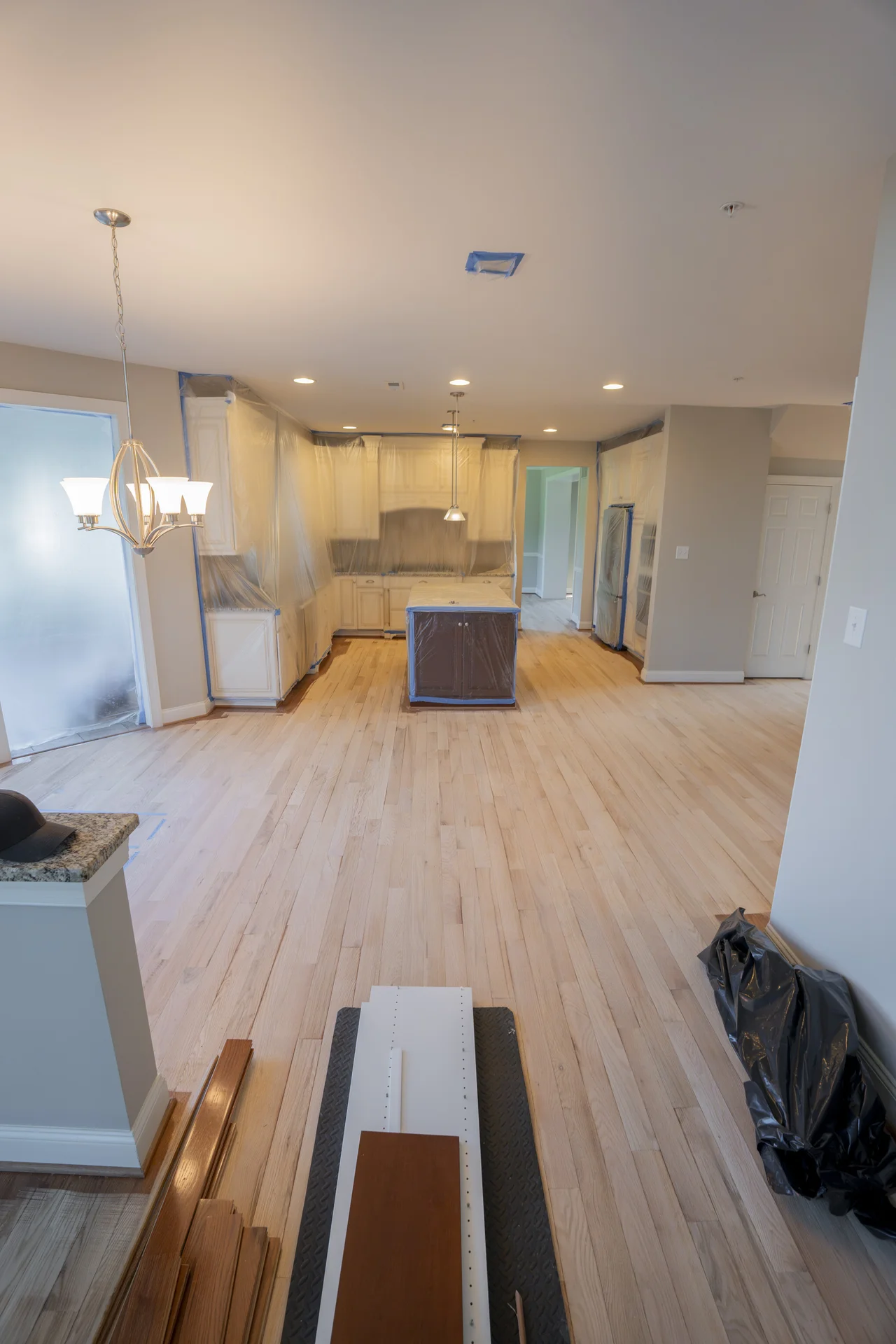
Matching the finish to Lower Merion homes and wood species
Lower Merion has a deep stock of early twentieth-century homes — stone colonials, Tudors and Victorians across Bryn Mawr, Merion, Ardmore and Gladwyne. Many still have original solid hardwood floors, often red oak or white oak strip, sometimes with borders or parquet. These older floors shape the finish decision.
Red oak
Red oak has pinkish undertones. A water-based finish over natural red oak can look slightly pink or washed out to some eyes. Oil-based polyurethane warms it into the familiar golden color many period homes were built with.
White oak
White oak is the species behind most of today’s light, refined interiors. Water-based finish keeps its soft beige-gray color. Oil-based will push it toward a honey tone over time. See how the two species compare in our white oak vs. red oak guide.
Solid vs. engineered hardwood
Both solid and engineered hardwood can take either finish. The limit is the wear layer: solid hardwood can be sanded many times, while engineered boards have a thinner top layer of real wood. A thinner layer means fewer sandings, so picking a durable finish matters even more.
Pennsylvania humidity
Southeastern Pennsylvania swings from humid summers to dry, heated winters. Wood flooring guidelines from the National Wood Flooring Association stress keeping indoor conditions steady, generally around 35–55% relative humidity. If your boards gap every January and close up again in July, that movement can crack a brittle finish at the seams. A flexible, well-applied finish and steady humidity protect the floor better than either finish alone.
How professional hardwood floor refinishing works with each finish
The finish is only as good as the preparation under it. Here is how a careful refinishing job unfolds, and why each step matters.
1. Inspection and moisture check
The crew checks board thickness, old repairs and moisture with a moisture meter. Finishing over damp wood can cause the coating to cloud, peel or fail to bond.
2. Sanding in stages
The floor is sanded with progressively finer grits, then edged along walls and hand-scraped in corners. Skipped grits leave swirl marks that the finish will magnify, especially under clear water-based coats.
3. Dust control and cleaning
Every bit of dust is vacuumed and tacked off. Dust trapped in the first coat becomes a permanent rough spot. Learn how to get ready in our refinishing preparation checklist.
4. Stain (optional) and sealer
If you want a stain color, it goes on next and must dry fully. A sealer coat then locks the color in and helps the topcoats bond evenly.
5. Topcoats and light abrading
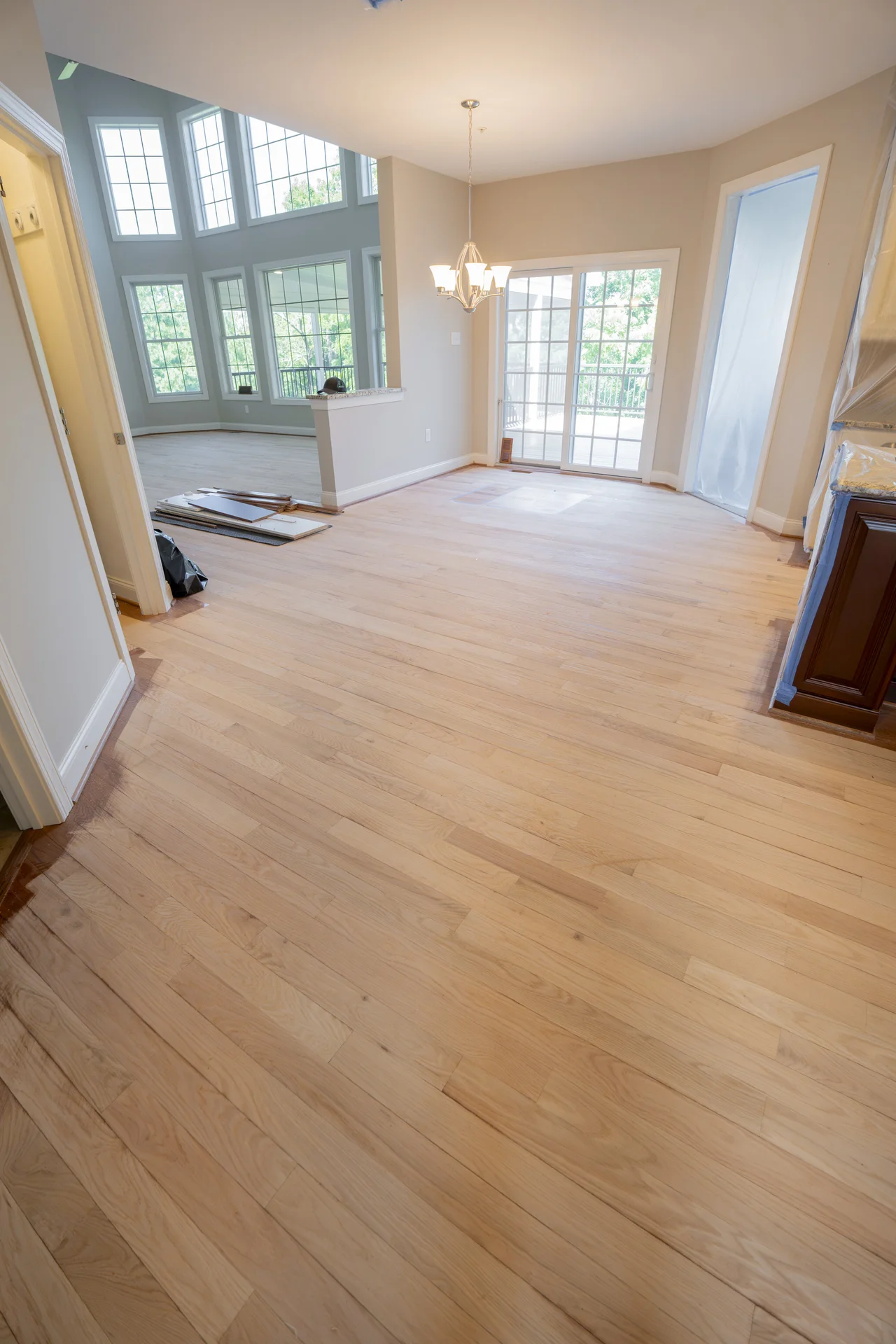
Polyurethane is applied in thin, even coats, with a light screen between coats for adhesion and smoothness. Our hardwood floor refinishing in Lower Merion follows this sequence on every floor, whichever finish you choose.
How to decide: a simple checklist
Use these questions to narrow your choice before your consultation.
- Do you want the wood to stay light? Choose water-based.
- Do you love warm, golden, traditional floors? Choose oil-based.
- Do you need to live in the home during the work? Water-based is easier on the air and the schedule.
- Is this a kitchen or high-traffic hall? A two-component water-based finish is a strong option.
- Are you matching an existing floor in another room? Match the finish type so colors age together.
If your floors are worn but still structurally sound, explore our professional hardwood floor refinishing service. If boards are too thin or damaged, our hardwood flooring installation in Lower Merion may be the better path. Tesla Hardfloor is licensed and insured, and we come to you for on-site consultations.
FAQ
Common hardwood floor refinishing questions from homeowners in Lower Merion and nearby communities.
How much does it cost to have wood floors refinished?
The cost depends on the size of the area, the condition of the wood, stain choice, stairs, and whether you choose water-based or oil-based polyurethane. Because every floor is different, the best way to get an accurate answer is to request a free estimate so we can see the floor in person.
How do you tell if hardwood floors can be refinished?
Most solid hardwood floors can be refinished if the boards still have enough thickness above the tongue and are not soft from water damage. A professional checks board thickness at a floor vent or threshold, looks for loose or cupped boards, and confirms engineered floors still have enough wear layer to sand.
How long after hardwood floor refinishing can you walk on the floor?
You can usually walk on a water-based finish in socks after about 24 hours, while oil-based finishes often need 24 to 48 hours or more. Full cure takes roughly two to four weeks, so wait before laying rugs or sliding heavy furniture.
How do you properly refinish hardwood floors?
Proper refinishing means sanding through progressive grits, edging and scraping corners, removing all dust, applying stain if wanted, then sealing and adding several thin coats of polyurethane with light screening between coats. Choosing water based vs oil based polyurethane in Lower Merion, PA depends on the color and dry time you want.
How does sandless hardwood floor refinishing work?
Sandless refinishing cleans and lightly abrades the existing finish, then adds a fresh topcoat without sanding to bare wood. It works for floors with dull, light surface wear, but it cannot remove deep scratches, stains or gray water marks, which need a full sanding.
How much is hardwood floor sanding?
Sanding is priced as part of the full refinishing job and depends on square footage, the number of passes the wood needs, old finish removal and repairs. Call us for a quote on your project and we will explain exactly what your floor needs.
Related Posts
- How to Care for Newly Refinished Hardwood Floors: The First 30 Days
- Hardwood Floor Stain Colors on Red Oak and White Oak
- Restoring Antique Hardwood Floors in PA Historic Homes
- Solid vs. Engineered Hardwood for PA Homes
- Hardwood Flooring Services in Lower Merion, PA
Ready to refinish your floors in Lower Merion?
Whether you want the timeless warmth of an amber finish or the clean clarity of a modern clear coat, the right choice starts with seeing your floor in person. We’ll assess the wood, show you samples and recommend the finish that suits your home and your routine.
If you’re still weighing water based vs oil based polyurethane in Lower Merion, PA, request a free estimate and we’ll help you choose with confidence.
Prefer to call? +1 (215) 607-2734