
Blog
Stair Restoration in Solebury, PA: A Local Homeowner’s Guide
Stair restoration in Solebury, PA means sanding, repairing and refinishing your hardwood staircase so the treads, risers and railings look refined and feel solid again. Done well, it brings back the original character of the wood without replacing the whole staircase.
Many homes in Solebury Township have stairs that have seen decades of daily use. This guide explains what restoration involves, what older homes typically need, and how to prepare.
Stair restoration in Solebury, PA: why older homes need it
According to U.S. Census Bureau data, half of the homes in Solebury Township were built in 1983 or earlier. The median year built is 1983. That means a large share of local staircases have been climbed for forty years or more.
The same data shows that about 93% of households in Solebury Township own their home. Owners tend to think long term. A staircase is one of the few features that every guest sees first, and it is worth protecting.
What homes of this age typically need
In general terms, staircases in homes built in the early 1980s or before show the same patterns:
- Worn finish on the treads: The center of each step takes the most traffic, so the finish thins out there first.
- Dulled or yellowed coating: Older finishes darken and lose their depth over time.
- Loose or wobbly parts: Balusters, newel posts and handrails can loosen as the wood moves with the seasons.
- Squeaks: Treads that have shifted over the years can rub against risers or stringers.
- Outdated stain colors: Many owners want to update a dark, heavy tone to something lighter and more modern.
Staircases like these are strong candidates for restoration. The wood is usually solid, and the structure is sound. What it needs is care.
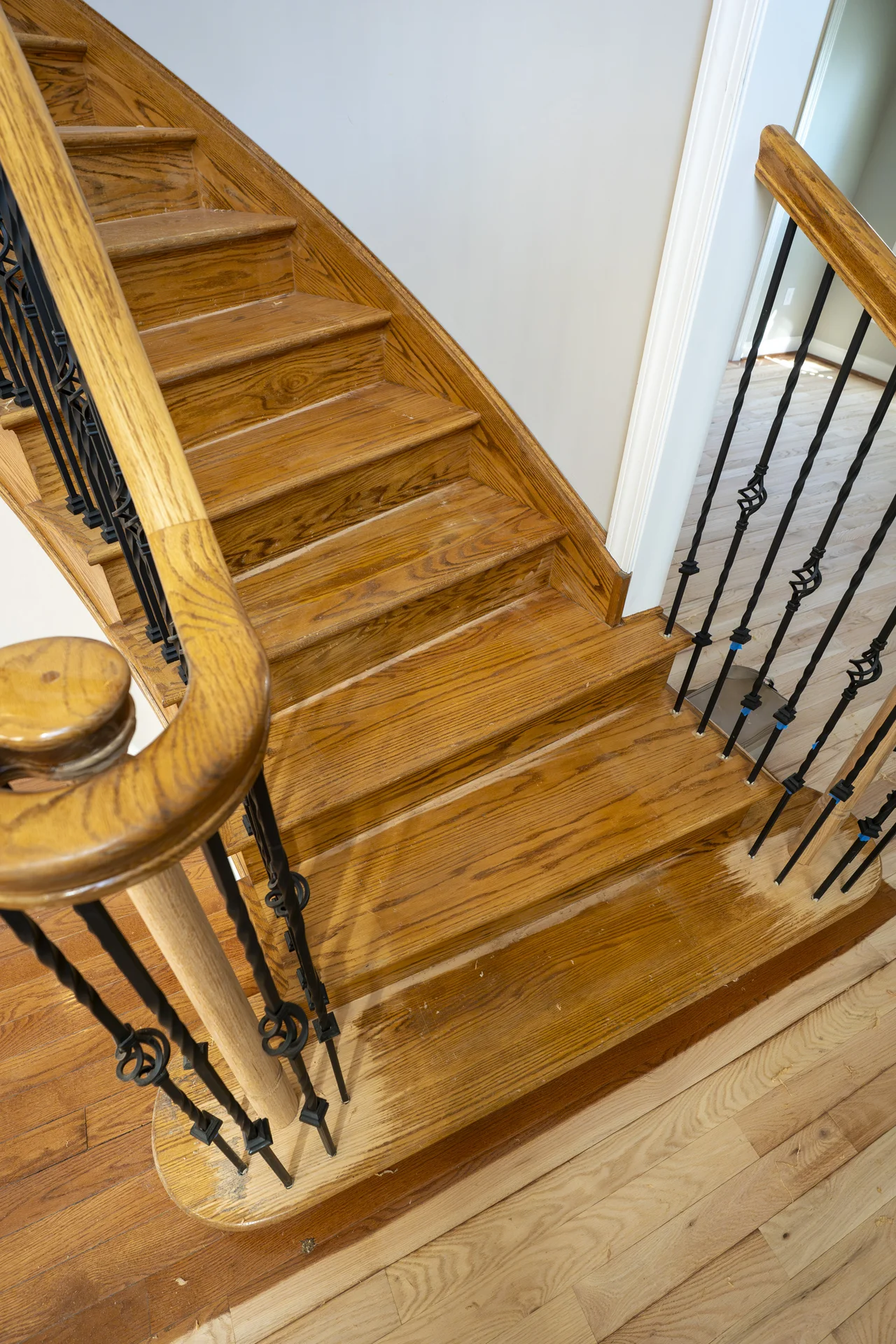
How professional stair restoration works, step by step
Each section of this process is its own stage. Skipping one shows up later as peeling, uneven color or a finish that wears out early.
1. Inspection and repair
The work starts with a close look at every tread, riser, stringer and rail. We check for loose boards, gaps, cracks, and signs of past water damage. Loose parts are secured first, because a beautiful finish on an unstable step is not a real restoration.
2. Sanding to bare wood
Sanding removes the old finish and the worn surface layer. Stairs are tight spaces, so this takes a mix of machines and hand work to reach edges, corners and the spots where a large sander cannot go. Dust control matters here, especially in a lived-in home.
3. Staining or keeping the natural tone
Once the wood is bare, you choose. Some owners keep the natural color of the wood. Others prefer a richer stain. Stair treads and the nearby floors should look like one family, so the color is often matched to the surrounding rooms. For help with this choice, see our guide to light, mid and dark hardwood stain colors.
4. Sealing with a durable finish
The finish protects the wood from foot traffic. Stairs take more abuse than almost any other surface, so the finish choice and the number of coats matter. A sheen that is too glossy can feel slippery underfoot, which is why many homeowners prefer a lower sheen on treads. Our comparison of matte, satin and semi-gloss finishes explains the tradeoffs.
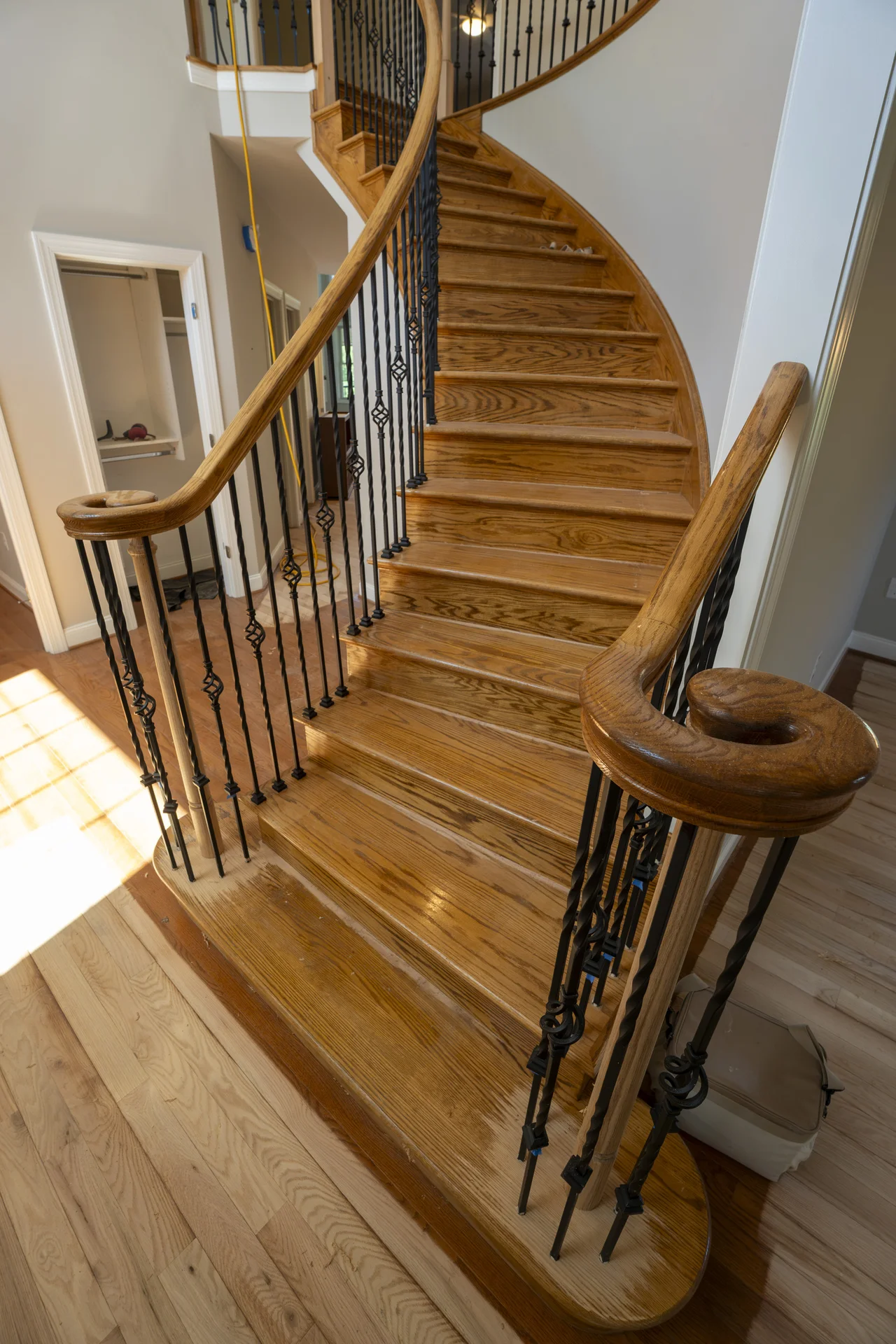
Restoration, refinishing or replacement: how to choose
These words are often used as if they mean the same thing. They do not, and the right choice depends on the condition of your stairs.
Refinishing
Refinishing is the right fit when the structure is sound and the surface is tired. The wood is sanded and a new finish is applied. Our page on hardwood refinishing in Solebury, PA explains how we handle this for floors and stairs alike.
Full restoration
Restoration goes further. It includes repairs to treads, rails, balusters or newel posts, along with refinishing. If you have a staircase with real character, this is usually the best way to protect it. You can see how we approach this on our page for stair installation and restoration in Solebury, PA.
Replacement
Replacement makes sense when treads are cracked through, rotted, or structurally unsafe. It can also be a design choice when you want a new look. A licensed and insured team can replace treads and risers so they blend with the existing hardwood. If you are weighing options, our guide on installation vs. refinishing can help you decide.
- Choose refinishing if the wood is solid and the finish is worn or dated.
- Choose restoration if you also have loose rails, squeaks or damaged parts.
- Choose replacement if treads are cracked, rotted or unsafe.
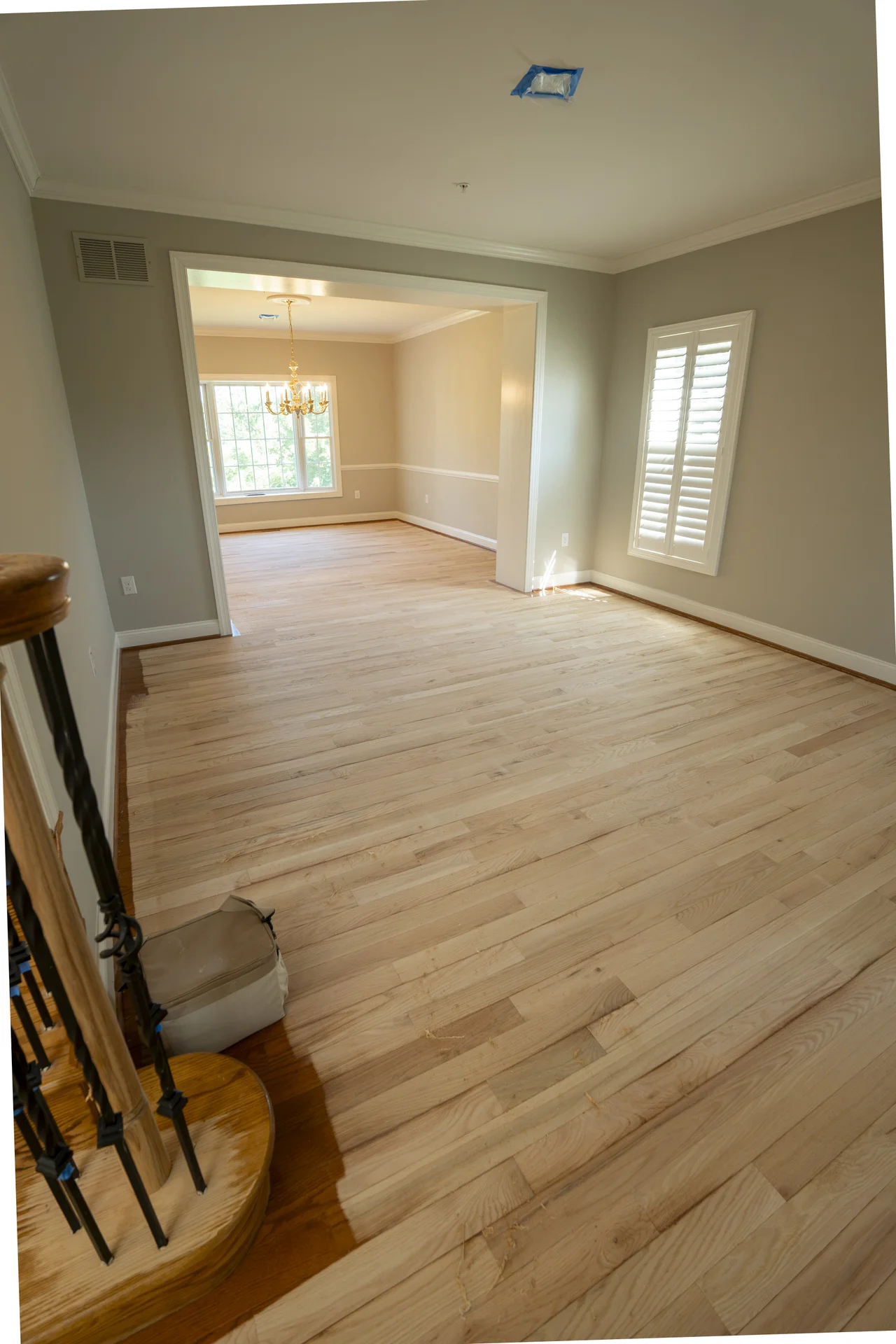
Preparing your Solebury home for stair work
Good preparation makes the work faster and cleaner. A few simple steps help:
- Plan your path through the house. Stairs will be out of use while the finish cures, so decide in advance how you will move between floors.
- Clear the area. Remove rugs, runners, wall art near the stairs and anything stored on the steps.
- Think about pets and children. Fresh finish needs a calm, dry space.
- Choose your color early. Sample the stain on the actual wood before the full job begins.
For floors in the same space, our dustless refinishing checklist covers what to do before the crew arrives. If you want the stairs and the floors around them to look like one design, our hardwood flooring in Solebury, PA page shows the full range of services.
When is the best time to book?
Google search data shows that searches for “stair restoration” in New Jersey and Pennsylvania peak in December, at about 20 searches a month, and are lowest in October, at about 10 a month (Google Keyword Planner, last 12 months). Many homeowners start thinking about stairs when guests are coming for the holidays. Booking earlier gives you more choice of dates.
Caring for restored stairs
A restored staircase can last for many years with simple care. The National Wood Flooring Association (nwfa.org) publishes maintenance guidance for finished wood surfaces, and the basics are easy to follow:
- Sweep or vacuum with a soft brush attachment on a regular basis.
- Use cleaners made for finished hardwood. Avoid soaking the wood or using harsh chemicals.
- Add felt pads under furniture that sits near the stairs.
- Avoid walking on treads in cleats or high heels.
- Wipe up spills right away.
Our guide on caring for newly refinished hardwood in the first 30 days gives a clear plan for the weeks after the work is done, and our list of products to use and avoid on hardwood keeps the finish looking its best.
FAQ
Common questions from homeowners in Solebury and nearby areas about stair restoration.
What is included in stair restoration in Solebury, PA?
A typical project includes inspecting the staircase, repairing loose or damaged parts, sanding to bare wood, staining if you want a new color, and sealing with a durable finish. The exact scope depends on the condition of your stairs.
Can my old staircase be restored instead of replaced?
In most cases, yes. If the treads, risers and stringers are structurally sound, restoration can bring back the look of the wood. Replacement is only needed when parts are cracked through, rotted or unsafe.
How long does stair refinishing take?
It depends on the size of the staircase, the number of coats and the drying time of the finish. Stairs are usually out of use for a short period while the finish cures. See our guide on how long hardwood floor refinishing takes for a full timeline.
Will sanding remove deep scratches and wear from my stairs?
Sanding removes most surface scratches and worn finish. Very deep gouges may still leave a faint mark, but they usually become much less visible after sanding and refinishing.
Can you match the stair color to my existing floors?
Yes. We can sample stain colors on your wood so the stairs and the surrounding floors look like one design. Matching takes a little care because older wood and new wood can take stain differently.
Are you licensed and insured?
Yes, Tesla Hardfloor is licensed and insured. We provide free in-home estimates, so you can ask any questions about your project before you decide.
Related Posts
- Stair Refinishing: The Complete Process from Start to Finish
- How Many Times Can You Refinish Hardwood Floors?
- Restoring Antique Hardwood Floors in PA Historic Homes
- How to Match New Hardwood with Your Existing Floors
- Your Checklist for a Successful Stair Installation Project
Ready for stair restoration in Solebury, PA?
If you are thinking about stair restoration in Solebury, PA, we are glad to look at your staircase, explain what it needs and show you the options. Request a free estimate and we will come to you.
Prefer to talk? Call +1 (215) 607-2734